


Waking up with a stiff neck is more than just uncomfortable; it can affect your mood, posture, and productivity throughout the day. Neck pain is often caused or worsened by poor sleep posture, and the wrong pillow can be a major culprit. Choosing the best pillow for neck pain is not about finding the fluffiest option. It’s about support, alignment, and comfort tailored to your sleeping position.
In this guide, we’ll explore what causes neck pain, how pillows play a role, and what to look for in a neck-friendly pillow.
Why does neck pain happen during sleep?

Your neck supports the weight of your head throughout the day. When you sleep, your muscles and ligaments are meant to relax and recover. But if your pillow fails to support the natural curve of your cervical spine, it puts unnecessary strain on your neck joints and muscles. That leads to stiffness, soreness, and sometimes even headaches.
Some common reasons for sleep-related neck pain include:
- Sleeping on a pillow that is too high or too low
- Using an old, worn-out pillow
- Choosing a pillow that doesn’t match your sleep position
- Poor posture or alignment during the night
How pillows affect neck pain

A good pillow aligns your head and neck with the rest of your spine. It should fill the space between your head and shoulders without bending your neck too far forward or sideways.
The ideal pillow provides:
- Neck support: It maintains the natural curve of the cervical spine.
- Pressure relief: It prevents strain by distributing weight evenly.
- Consistent loft: It stays firm or supportive through the night without flattening.
Not all pillows are created equal. Some materials and shapes work better for certain sleeping styles than others.
Best types of pillows for neck pain
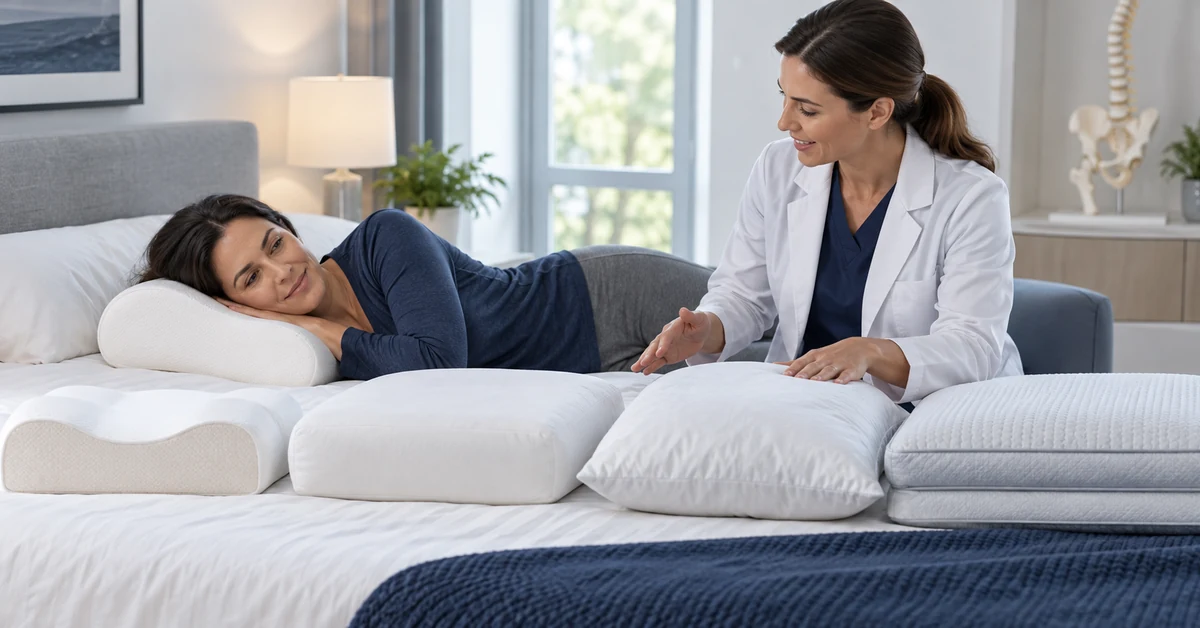
Let’s take a look at pillow types that help reduce or prevent neck pain. Choosing the right one depends on your preferred sleeping position and comfort needs.
1. Memory foam pillows
Memory foam is known for its ability to conform to the shape of your head and neck. It offers balanced support and keeps your spine aligned. These pillows are especially helpful for side and back sleepers. Look for a contoured memory foam pillow that supports the neck’s curve.
2. Cervical pillows
Cervical pillows are specifically shaped to cradle the neck and promote healthy posture. They often have a dip in the middle for your head and raised edges for your neck. These are ideal for people with chronic neck pain or disc problems.
3. Latex pillows
Natural latex pillows are supportive, breathable, and more durable than memory foam. They hold their shape well and are great for allergy sufferers. Latex is also a good option for people who prefer a firmer feel without pressure on the neck.
4. Feather or down pillows
Feather or down pillows offer a soft, moldable feel. They’re great for people who like to adjust their pillow’s shape during the night. However, they may not provide enough consistent support for everyone. If you choose this type, make sure it has enough loft to keep your neck in alignment.
5. Water pillows
Water pillows let you adjust the firmness by adding or removing water. The water base provides steady support and conforms to your head and neck movements. This type is often recommended by chiropractors and physical therapists.
Best pillow based on sleeping position
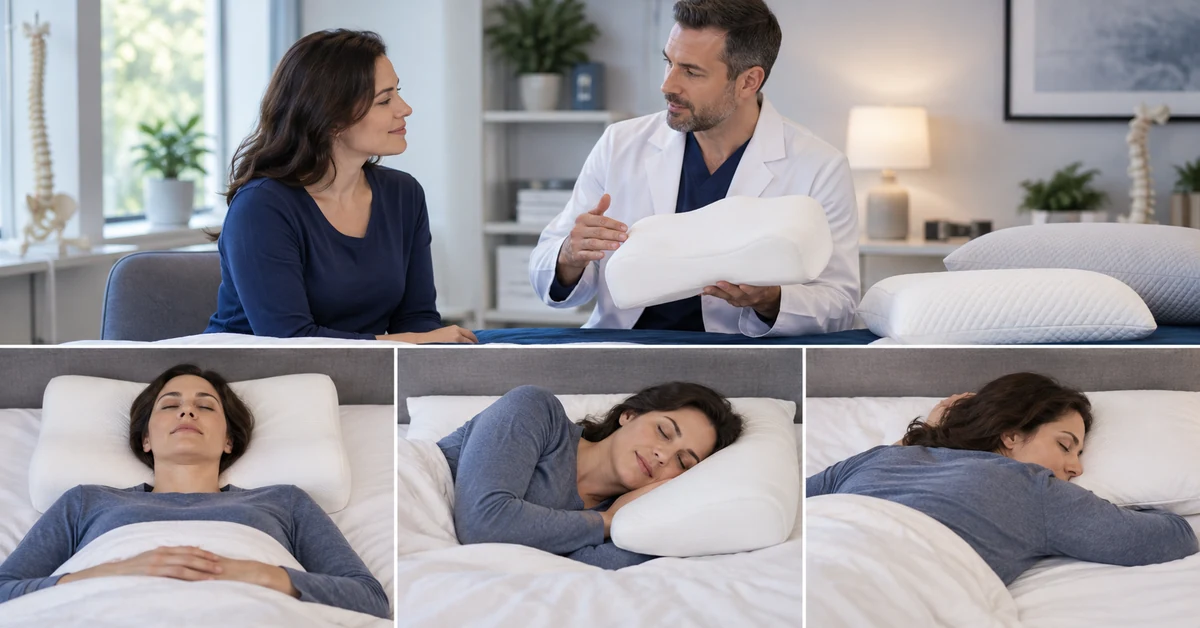
Your sleeping posture plays a key role in choosing the best pillow.
Side Sleepers
Side sleepers need a thick, firm pillow that fills the space between the ear and shoulder. A contoured or high-loft pillow helps prevent the head from tilting down.
Best options: Memory foam, latex, or a firm down-alternative pillow
Back Sleepers
Back sleepers need a pillow that supports the neck without pushing the head forward. A medium-loft pillow with a cervical curve works best.
Best options: Cervical pillows, memory foam, or water pillows
Stomach Sleepers
Sleeping on the stomach is tough on the neck, but if you must, use a very thin pillow or none at all to keep your neck from twisting.
Best options: Thin down pillows or low-loft memory foam
How to know If your pillow is causing neck pain
Here are some signs that your pillow might be to blame for your neck pain:
- You wake up with a sore or stiff neck regularly
- You toss and turn throughout the night looking for a comfortable spot
- Your pillow is more than two years old
- Your pillow has lost its shape or support
If any of these apply, it’s likely time for a pillow upgrade.
Tips for reducing neck pain while sleeping
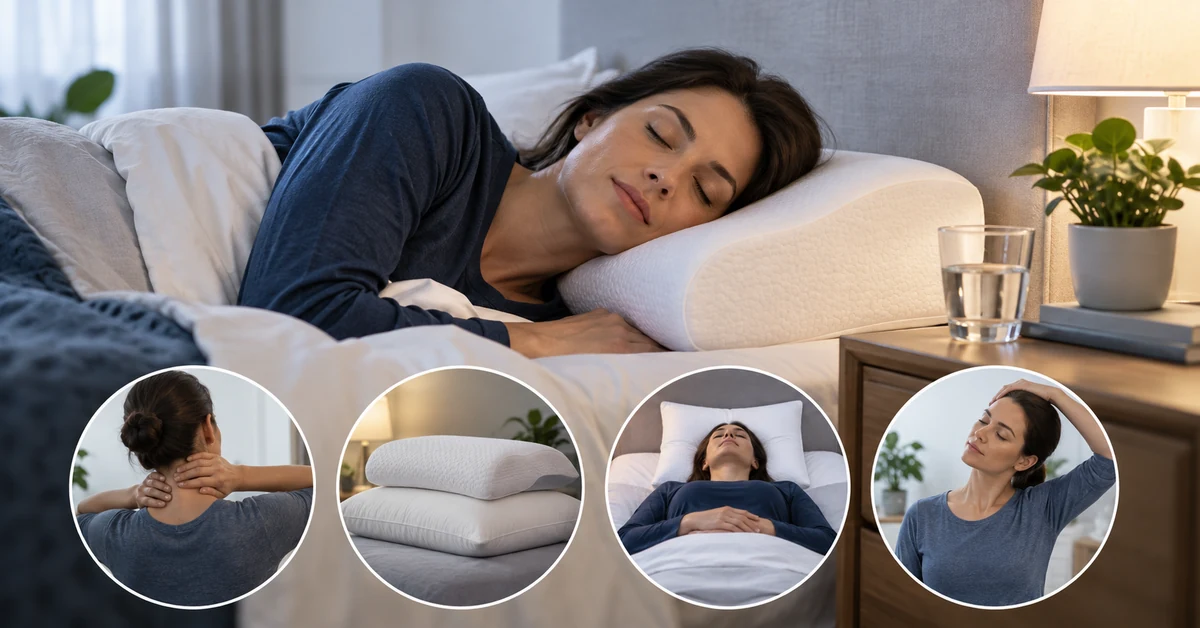
Even with the right pillow, you can take extra steps to minimize neck pain:
- Keep your spine neutral: Your ears, shoulders, and hips should be aligned in bed.
- Use a supportive mattress: Your mattress and pillow work together to keep your spine aligned.
- Practice gentle stretches: Neck stretches in the morning can ease stiffness.
- Avoid sleeping on your stomach: It puts unnecessary strain on your neck and back.
When to see a doctor

If your neck pain doesn’t improve with a new pillow or stretches, you should speak with a healthcare provider. Chronic pain, numbness, or tingling can be signs of a deeper issue like a pinched nerve or cervical disc problem.
Final Thoughts

There is no one-size-fits-all pillow for neck pain. What works for a side sleeper may not help a back sleeper. The key is to find a pillow that aligns your neck and spine, supports your natural posture, and feels comfortable all night long.Investing in the right pillow can change the way you sleep and how you feel when you wake up.