

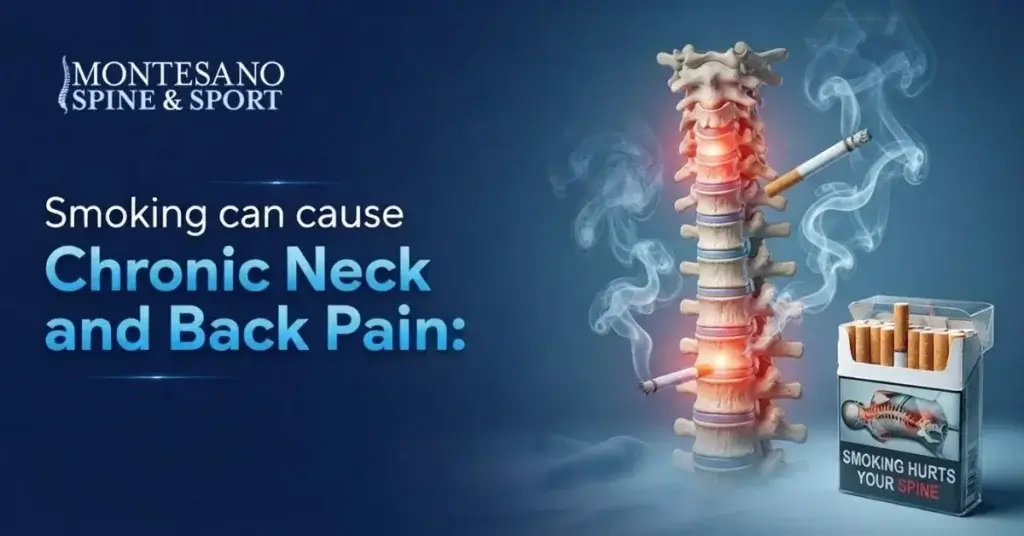
Many people associate smoking with lung disease or heart problems, but fewer realize how strongly it affects the spine. If you are dealing with ongoing neck or back discomfort, smoking could be one of the hidden reasons behind it. Understanding this connection can help you take the right steps toward long-term relief.

How Smoking Impacts Your Spine
Your spine depends on a steady supply of oxygen-rich blood to stay healthy. Smoking interferes with this process in several ways:
- It reduces blood flow to spinal discs and joints
- It limits oxygen delivery to muscles and tissues
- It slows down healing after injuries or surgery
- It increases inflammation throughout the body
Over time, these effects can weaken spinal structures and increase the likelihood of chronic pain.
Why Smokers Are More Likely to Experience Chronic Pain

Smokers often report higher levels of neck and back pain compared to non-smokers. This is not a coincidence. The chemicals in cigarettes affect your body’s natural repair system, making even minor strain or injury last longer than it should.
Here are some common reasons:
1. Disc Degeneration
Spinal discs act as cushions between your vertebrae. Smoking accelerates wear and tear on these discs, which can lead to stiffness, reduced flexibility, and pain.
2. Poor Circulation
When blood flow is restricted, your muscles and joints do not receive the nutrients they need. This can lead to muscle fatigue and persistent discomfort.
3. Increased Inflammation
Smoking triggers inflammation, which can worsen existing spine conditions and increase sensitivity to pain.
4. Delayed Healing
If you have had a back injury or surgery, smoking can significantly slow down recovery, making pain last longer.
Smoking and Spine Health
| Factor | Effect of Smoking | Impact on Neck and Back |
| Blood Circulation | Reduced blood flow | Slower healing and muscle fatigue |
| Oxygen Supply | Lower oxygen levels | Weak tissue repair |
| Spinal Discs | Accelerated degeneration | Chronic pain and stiffness |
| Inflammation | Increased inflammation | Worsening of pain conditions |
| Recovery Time | Delayed healing | Prolonged discomfort after injury |
Signs Your Pain May Be Linked to Smoking

It is not always obvious that smoking is contributing to your pain. However, some patterns can point in that direction:
- Pain that does not improve despite rest
- Slow recovery after physical strain
- Frequent stiffness in the neck or lower back
- Pain that worsens over time without a clear cause
If you notice these signs and you smoke regularly, it may be time to consider the connection.
Can Quitting Smoking Improve Back and Neck Pain?
Yes, quitting smoking can make a noticeable difference. While it may not reverse all damage, it allows your body to begin repairing itself. Improved circulation and oxygen flow can help reduce inflammation and support healing.
Many people experience:
- Reduced pain intensity
- Better mobility
- Faster recovery from injuries
- Improved overall spine health
Even small improvements can have a meaningful impact on your daily life.
Practical Steps to Protect Your Spine
If you are serious about reducing neck and back pain, consider these steps:
- Quit smoking or reduce your intake gradually
- Stay active with light exercise and stretching
- Maintain proper posture while sitting and standing
- Stay hydrated to support spinal disc health
- Seek medical advice if pain persists
Taking action early can prevent minor discomfort from turning into a long-term issue.
When to Seek Professional Help
If your pain is ongoing or affecting your daily routine, it is important to consult a healthcare professional. A proper diagnosis can help identify whether smoking is a contributing factor and guide you toward the right treatment plan.
Clinics like Montesano Spine & Sport focus on improving quality of life by addressing the root causes of pain, not just the symptoms.