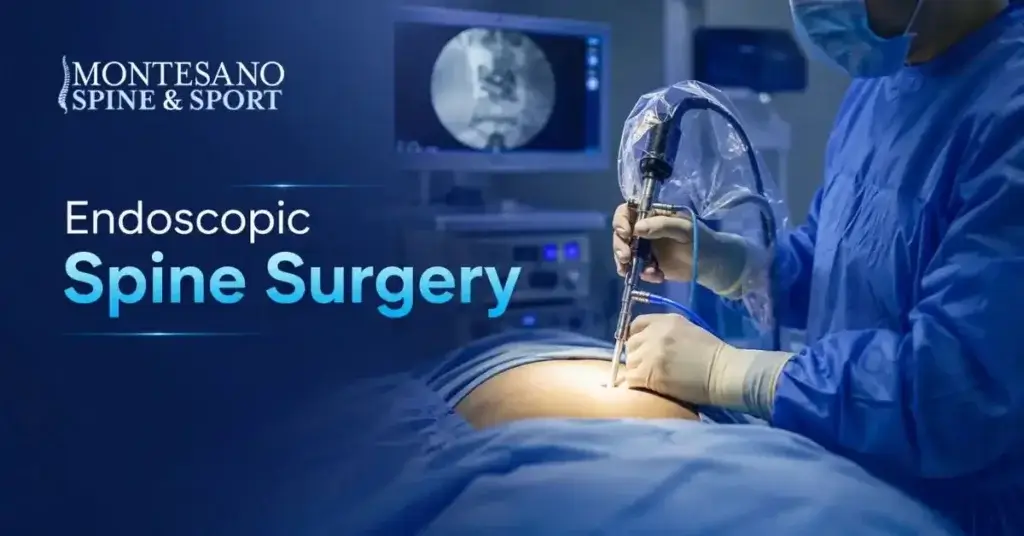
Back and neck pain can make everyday activities difficult, especially when symptoms are caused by a herniated disc, spinal stenosis, or nerve compression. In recent years, endoscopic spine surgery has become one of the most advanced minimally invasive options for treating these conditions. This technique uses a small camera and specialized surgical tools to access the spine through tiny incisions, helping reduce damage to surrounding muscles and tissues.
For many patients, endoscopic treatment may lead to less postoperative discomfort, shorter recovery times, and a faster return to daily life compared to traditional open surgery. While not every spine condition can be treated with an endoscopic approach, it has become an important option for carefully selected patients looking for effective relief with a less invasive procedure.
Key Takeaway: Endoscopic spine surgery is an advanced minimally invasive treatment that aims to relieve spinal pain while reducing tissue disruption and recovery time.
What Is Endoscopic Spine Surgery?
Endoscopic spine surgery is a minimally invasive procedure that allows surgeons to treat spinal conditions using a thin tube equipped with a camera called an endoscope. The camera provides a magnified view of the surgical area, allowing the surgeon to work through a very small incision.
Unlike traditional spine surgery, which may require larger cuts and more muscle separation, endoscopic techniques are designed to preserve healthy tissues around the spine as much as possible.
This procedure is commonly used to treat conditions such as:
- Herniated discs
- Foraminal stenosis
- Sciatica
- Pinched nerves
- Degenerative disc disease
- Certain cases of spinal stenosis
In many cases, the surgery can be performed on an outpatient basis, depending on the patient’s condition and overall health.
Key Takeaway: Endoscopic spine surgery uses a small camera and specialized instruments to treat spinal conditions through smaller incisions.
How Endoscopic Treatment Works
During endoscopic treatment, the surgeon inserts a small endoscope through a tiny incision near the affected area of the spine. The camera projects high-definition images onto a monitor, allowing the surgeon to precisely remove damaged tissue or relieve nerve compression.
The procedure typically involves:
| Step | What Happens |
| Imaging and Planning | The surgeon identifies the exact spinal level requiring treatment |
| Small Incision | A small opening is made near the spine |
| Endoscope Placement | A thin camera tube is inserted to visualize the area |
| Tissue Removal | Herniated disc material or bone causing pressure is removed |
| Nerve Decompression | Pressure on spinal nerves is relieved |
| Closure | The incision is closed with minimal disruption to tissue |
Because the surrounding muscles and ligaments are preserved more effectively, patients may experience less postoperative soreness compared to traditional open procedures.
Key Takeaway: Endoscopic treatment focuses on targeted spinal decompression using small incisions and advanced visualization technology.
Conditions Commonly Treated With Endoscopic Spine Surgery
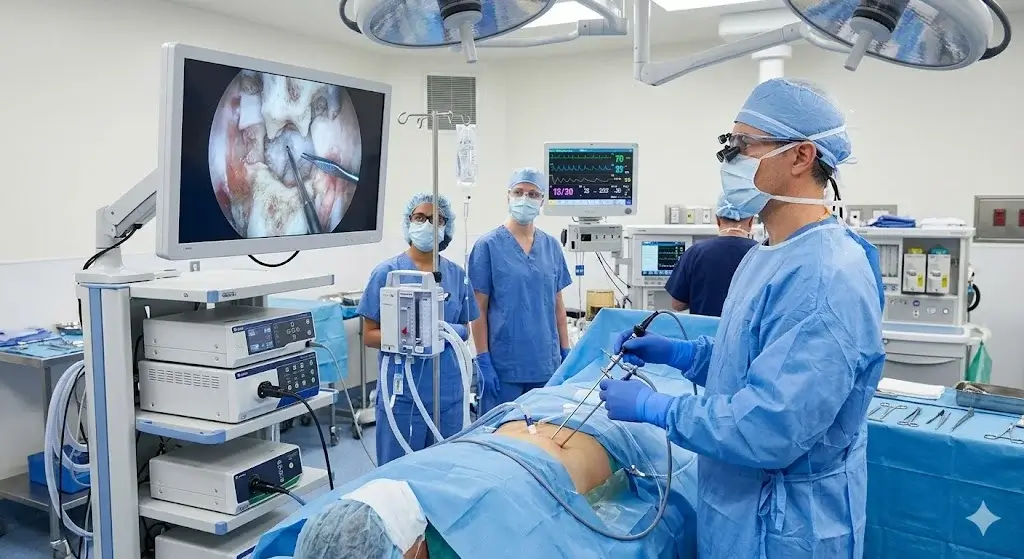
Endoscopic spine surgery is most commonly used for conditions involving nerve compression and disc-related pain.
Herniated Discs
A herniated disc occurs when the soft center of a spinal disc pushes outward and irritates nearby nerves. Endoscopic surgery can remove the damaged disc material while minimizing disruption to surrounding structures.
Foraminal Stenosis
This condition happens when the openings where spinal nerves exit become narrowed. Endoscopic procedures may help create more space for the nerves.
Sciatica
Sciatica often causes pain that radiates from the lower back into the leg. Endoscopic decompression can relieve pressure on the sciatic nerve in selected patients.
Degenerative Spine Conditions
Some patients with age-related spinal degeneration may benefit from minimally invasive endoscopic treatment instead of larger open procedures.
Key Takeaway: Endoscopic spine surgery is often used for disc herniations, spinal narrowing, and nerve compression conditions.
Potential Benefits of Endoscopic Spine Surgery
One reason endoscopic spine surgery continues to gain attention is its ability to reduce disruption to the body while still addressing the source of pain.
Potential benefits may include:
- Smaller incisions
- Less muscle damage
- Reduced blood loss
- Shorter hospital stays
- Faster recovery periods
- Lower postoperative discomfort
- Earlier return to normal activities
For some patients, preserving the natural support structures of the spine may also help reduce long-term biomechanical changes after surgery.
It is important to remember that recovery timelines vary from person to person. Even with minimally invasive procedures, patients still need proper healing time and should follow all postoperative recommendations carefully.
Key Takeaway: The goal of endoscopic spine surgery is to relieve spinal pain with less tissue disruption and a smoother recovery experience.
Endoscopic Spine Surgery vs Traditional Open Surgery
| Feature | Endoscopic Spine Surgery | Traditional Open Surgery |
| Incision Size | Small | Larger |
| Muscle Disruption | Minimal | More extensive |
| Blood Loss | Usually lower | May be higher |
| Recovery Time | Often shorter | Typically longer |
| Hospital Stay | Sometimes outpatient | May require longer stay |
| Visualization | Camera-assisted | Direct surgical exposure |
Not every patient is a candidate for endoscopic surgery. Some complex spinal conditions still require open or more extensive procedures to achieve the best outcome.
Key Takeaway: Endoscopic procedures are designed to reduce surgical impact, but the right treatment depends on the patient’s specific condition.
Recovery After Endoscopic Spine Surgery
Recovery after endoscopic spine surgery is often quicker than traditional procedures, but healing still takes time.
Most patients are encouraged to:
- Walk soon after surgery
- Avoid heavy lifting during early recovery
- Follow physical therapy recommendations if prescribed
- Gradually return to normal activities
- Attend follow-up appointments
Some patients notice symptom improvement relatively quickly, while others improve gradually over several weeks.
Although minimally invasive techniques may reduce recovery challenges, there is still a possibility of recurrent disc problems or ongoing symptoms depending on the underlying condition.
Key Takeaway: Recovery after endoscopic spine surgery is usually faster than traditional surgery, but proper rehabilitation remains important.
Is Endoscopic Spine Surgery Right for Everyone?
Endoscopic spine surgery can be highly effective for properly selected patients, but it is not suitable for every spinal condition.
A spine specialist will evaluate factors such as:
- The exact source of pain
- Imaging results
- Severity of nerve compression
- Previous spine surgeries
- Overall spinal stability
- General health condition
Some patients may benefit more from other minimally invasive procedures or traditional surgical techniques.
The best treatment approach is always individualized based on the patient’s diagnosis and long-term spinal health goals.
Key Takeaway: Patient selection plays an important role in the success of endoscopic spine surgery.
The Future of Endoscopic Spine Surgery
Advancements in imaging systems, surgical instruments, and endoscopic technology continue to expand the role of minimally invasive spine care.
As techniques improve, surgeons are exploring additional applications that may help reduce the need for larger spinal procedures in selected patients.
There is also growing interest in performing certain procedures with less anesthesia exposure, which may offer benefits for older adults and patients with medical risks.
Endoscopic approaches continue to evolve as part of the broader movement toward more precise and tissue-preserving spine care.
Key Takeaway: Modern endoscopic techniques are helping shape the future of minimally invasive spine surgery.
Final Thoughts
Endoscopic spine surgery represents an important advancement in minimally invasive spine care. By using small incisions and specialized visualization technology, surgeons can treat certain spinal conditions while preserving more of the surrounding tissues.
For patients dealing with disc-related pain, nerve compression, or spinal narrowing, endoscopic treatment may provide effective symptom relief with a shorter recovery process compared to traditional surgery. However, every spinal condition is different, and the best treatment plan should always be based on a thorough evaluation by a qualified spine specialist.
Key Takeaway: Endoscopic spine surgery offers a modern minimally invasive option for treating selected spinal conditions while supporting faster recovery and reduced tissue disruption.
Request an Appointment
If you are living with back pain and want to explore safe and effective treatment options, the team at Montesano Spine & Sport is here to help.
Call +1 941-402-4003 to schedule your consultation and take the first step toward a more comfortable and active life.