Quick Answer: C3-C4 nerve-root compression most often causes pain or altered sensation in the neck, trapezius, and top of the shoulder. A C3-C4 problem that compresses the spinal cord can instead cause hand clumsiness, balance trouble, limb weakness, or bowel and bladder changes. Sudden weakness, breathing difficulty, or symptoms after major trauma require emergency care.
The C3-C4 motion segment sits in the upper-middle neck. Degeneration, disc herniation, bone spurs, stenosis, or trauma can affect its joints, C4 nerve root, or spinal cord. This guide explains those symptom patterns, diagnosis, and treatment without assuming every scan finding causes pain.
Common C3-C4 Symptoms
| Pattern | Possible source | What to do |
|---|---|---|
| Neck and upper-shoulder pain | C3-C4 disc, facet joint, or C4 nerve root | Arrange evaluation if persistent or limiting |
| Numbness near lower neck or shoulder | Possible C4 sensory involvement | Discuss with a clinician, especially if spreading |
| Hand clumsiness or balance trouble | Possible spinal cord compression | Seek prompt specialist assessment |
| Progressive arm or leg weakness | Nerve-root or spinal cord dysfunction | Obtain urgent medical evaluation |
| Breathing trouble after neck trauma | Possible high cervical cord or phrenic pathway injury | Call emergency services |
What Is the C3-C4 Spinal Segment?
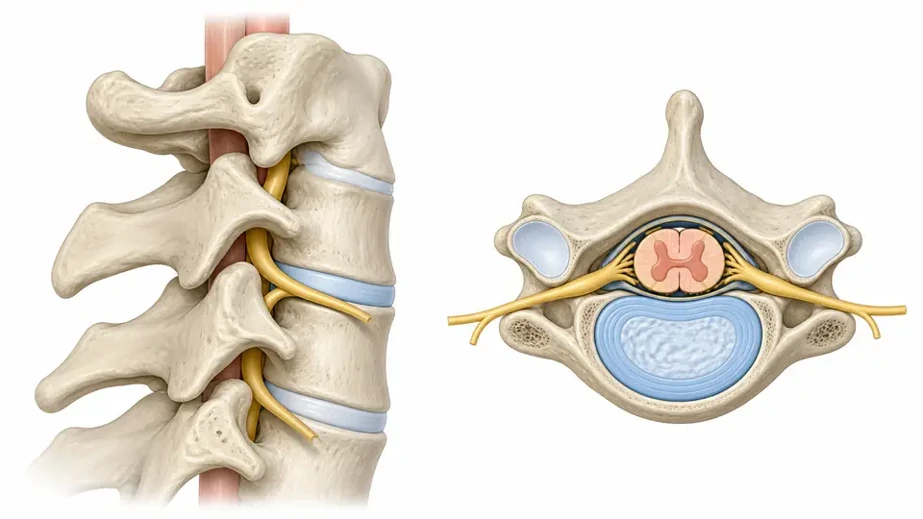
C3 and C4 are the third and fourth cervical vertebrae. Between them is a disc that absorbs load and permits motion. Facet joints guide movement, while paired foramina allow nerve roots to exit. In the cervical spine, the C4 nerve root exits at the C3-C4 level. The spinal cord travels through the central canal behind the disc and vertebral body.
Foraminal narrowing can irritate the C4 root, central canal narrowing can affect the spinal cord, and facet or disc degeneration can cause neck pain without neurologic loss.
Key Takeaway: At C3-C4, location matters: the foramen contains the C4 root, while the central canal contains the spinal cord.
What Causes C3-C4 Nerve or Cord Compression?
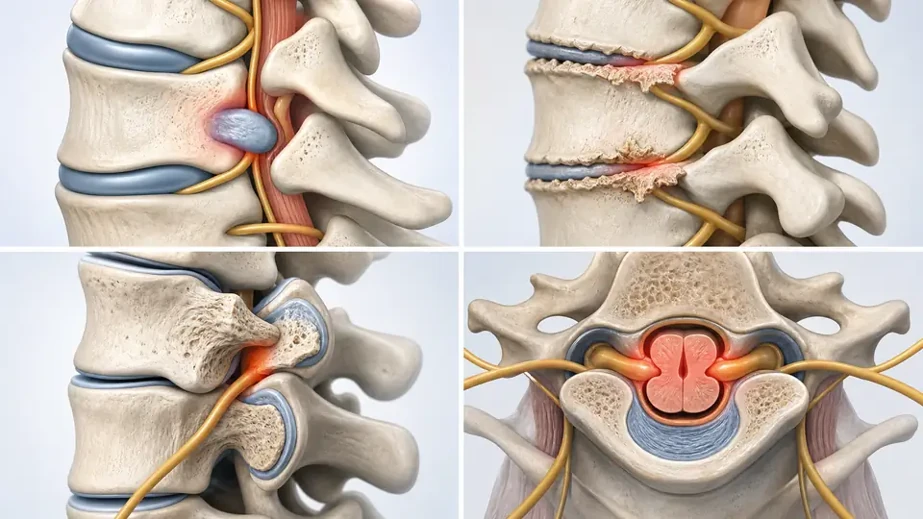
Age-related disc height loss can bring vertebrae closer together and promote bone spurs. A bulging or herniated disc may narrow the foramen or canal. Facet arthritis, thickened ligaments, congenital narrowing, and less commonly infection or tumor can also reduce space. Trauma may injure the disc, bone, nerve root, or cord.
Montesano Spine & Sport provides more background on age-related changes on its degenerative disc disease page.
Key Takeaway: Degeneration and disc herniation are common, but the direction and severity of narrowing determine what is compressed.
What Does C3-C4 Nerve Compression Feel Like?
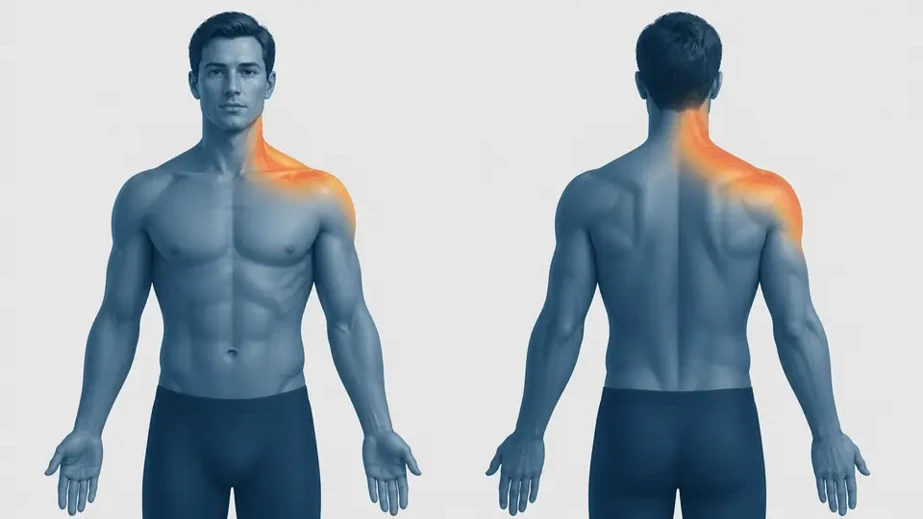
C4 nerve-root symptoms
C4 radiculopathy may cause aching, burning, or sharp pain along the neck into the trapezius and top of the shoulder. Numbness may occur near the lower neck, collar area, or shoulder cap. Prominent finger tingling suggests another level or condition.
Neck pain and headache
C3-C4 disc or facet pain can worsen with turning, looking up, or holding the head in one position. Pain may be referred toward the shoulder or back of the head. Headache has many possible causes, so it should not be attributed to C3-C4 solely because imaging shows degeneration.
Weakness and breathing concerns
Isolated C4-root compression may rarely affect shoulder elevation or contribute to diaphragm weakness, but breathing difficulty is not a routine pinched-nerve symptom. The phrenic nerve receives input from C3 through C5. Acute breathing trouble, especially after neck trauma or with widespread weakness, can indicate a high cervical spinal cord injury and is an emergency.
Key Takeaway: A C4 root problem usually stays near the neck and shoulder; breathing trouble or widespread deficits require urgent assessment for a more serious cause.
Radiculopathy, Myelopathy, and Spinal Cord Injury
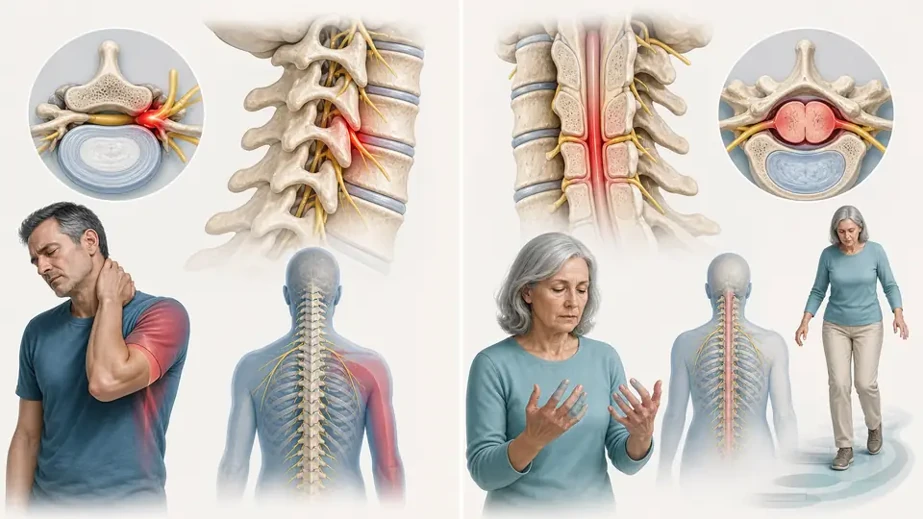
Radiculopathy means irritation or compression of one exiting nerve root. Myelopathy means dysfunction of the spinal cord, often from chronic canal narrowing. Warning signs include loss of hand dexterity, dropping objects, an unsteady or stiff gait, leg weakness or numbness, and unusually brisk reflexes. Bowel or bladder changes can occur in advanced cord compression.
A traumatic C3-C5 spinal cord injury is a separate emergency. It may cause paralysis or sensory loss below the injury, bladder and bowel dysfunction, and respiratory weakness. A degenerative C3-C4 MRI finding does not by itself mean spinal cord injury.
Key Takeaway: Radiculopathy affects a root, myelopathy affects the cord, and traumatic spinal cord injury is a distinct emergency condition.
When Do C3-C4 Symptoms Need Urgent Care?
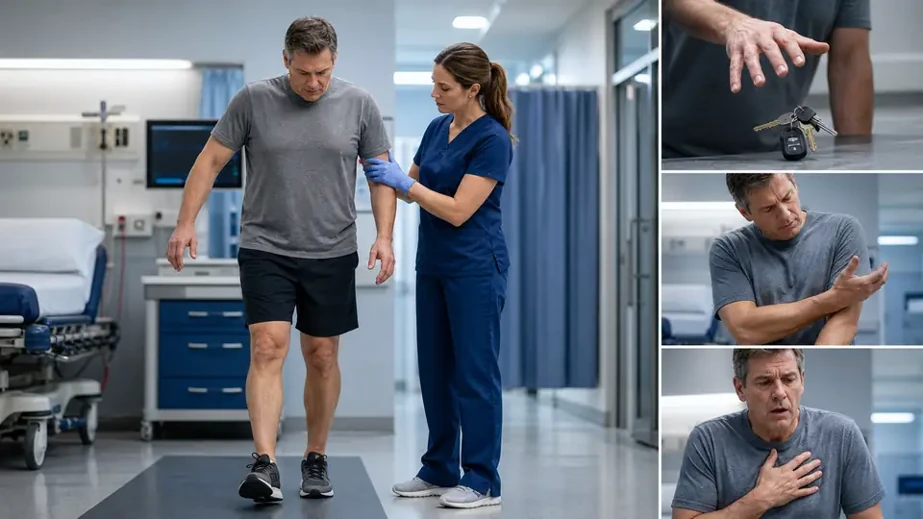
Seek emergency care after major head or neck trauma when there is severe pain, weakness, numbness, loss of movement, breathing difficulty, or loss of bladder or bowel control. Urgent assessment is also appropriate for rapidly progressive arm or leg weakness, new walking or balance problems, marked hand clumsiness, or symptoms affecting several limbs. Fever, cancer history, unexplained weight loss, or immune suppression with severe neck pain also warrants prompt medical attention.
Key Takeaway: Trauma, breathing difficulty, progressive weakness, gait change, or bowel and bladder dysfunction should not wait for routine care.
How Is a C3-C4 Problem Diagnosed?
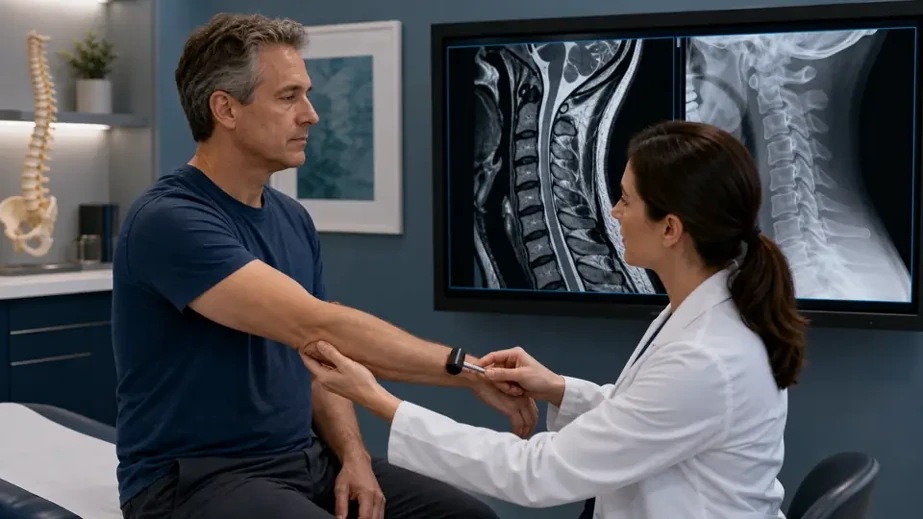
Diagnosis begins with the symptom timeline and an examination of neck motion, strength, sensation, reflexes, coordination, and gait. Shoulder disease, peripheral nerve problems, and headache disorders can imitate cervical symptoms, so the full pattern matters.
X-rays show alignment, disc-space loss, and bone spurs. MRI is usually the most informative test for discs, nerve roots, the spinal cord, and soft tissues when radiculopathy or myelopathy is suspected. CT gives greater bony detail. EMG and nerve-conduction studies may help when the affected nerve or diagnosis remains uncertain. Imaging should be matched to the examination because age-related abnormalities may be painless.
Learn more about the practice's evaluation process on the spine diagnosis page.
Key Takeaway: A meaningful diagnosis links the history and neurologic examination to an imaging finding at the correct level.
How Is C3-C4 Compression Treated?
Nonsurgical care
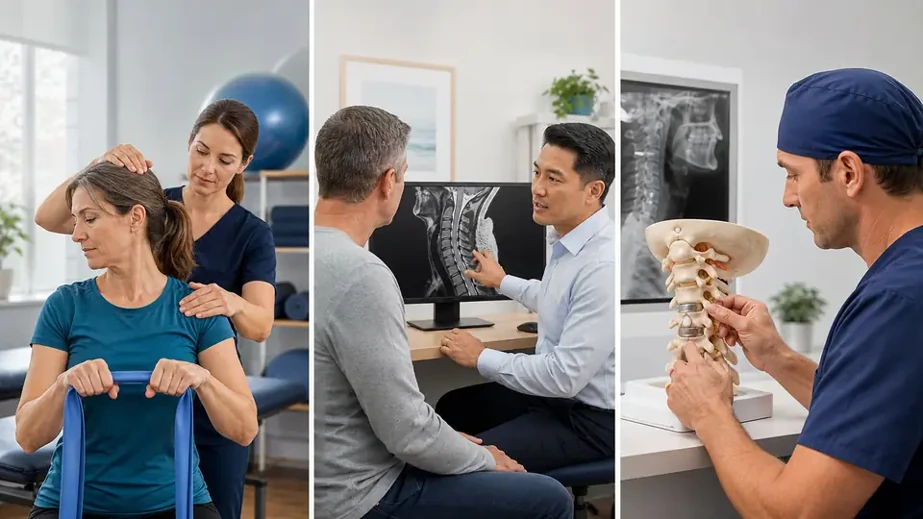
Many cases improve without surgery. Care may include temporary activity modification, clinician-directed physical therapy, ergonomic changes, and medication chosen for the patient's risks. A soft collar is sometimes used briefly, but prolonged use can weaken muscles. Avoid forceful self-manipulation when instability, trauma, or cord compression is possible.
Injections
A carefully selected cervical epidural or nerve-root injection may reduce inflammation and pain, but it does not remove structural compression. Facet or medial branch procedures target joint-generated pain rather than radiculopathy. See the practice's pain management overview for related options.
Surgery
Surgery may be considered for progressive neurologic loss, cervical myelopathy, instability, or persistent disabling symptoms with a matching compressive lesion. Options can include anterior cervical discectomy and fusion, posterior foraminotomy, or decompression. Cervical artificial disc replacement may preserve motion in selected patients, but candidacy depends on anatomy, stability, facet health, and other factors.
For procedure background, review Montesano Spine & Sport's pages on minimally invasive spine surgery and artificial disc replacement.
Key Takeaway: Treatment escalates according to neurologic risk, disability, and the exact structure causing compression.
Best Practices for Neck Health and Recovery

- Use a clinician-directed exercise plan that builds neck and shoulder endurance gradually.
- Position screens near eye level and take movement breaks during sustained desk or phone use.
- Choose a sleep position and pillow height that keep the neck near neutral rather than sharply bent.
- Report new weakness, hand clumsiness, balance changes, or spreading numbness promptly.
- Avoid smoking and follow medical guidance for bone, metabolic, and cardiovascular health.
Key Takeaway: Gradual conditioning, neutral positioning, and early reporting of neurologic changes support safer recovery.
Common Mistakes to Avoid
Common mistakes include assuming every C3-C4 MRI abnormality causes symptoms, confusing a C4 pinched nerve with spinal cord injury, and judging severity by pain alone. Other errors include ignoring gait or hand changes, trying forceful neck adjustments after trauma, staying inactive for long periods, or expecting an injection to correct severe structural compression. Headache, facial symptoms, and dizziness also deserve a broader evaluation rather than automatic attribution to one spinal level.
Key Takeaway: The largest diagnostic error is treating the scan instead of confirming that symptoms, examination, and anatomy agree.
Conclusion
C3-C4 symptoms range from neck and shoulder pain to neurologic problems caused by root or cord compression. Symptoms, examination, and imaging must agree before treatment is chosen. Most isolated radiculopathy improves without surgery, while progressive weakness, myelopathy, breathing trouble, or traumatic cord symptoms require faster action.
Key Takeaway: Correctly separating mechanical pain, radiculopathy, myelopathy, and spinal cord injury determines urgency and treatment.
Resources and References
- American Academy of Orthopaedic Surgeons. Cervical Radiculopathy (Pinched Nerve).
- American Academy of Orthopaedic Surgeons. Cervical Spondylosis (Arthritis of the Neck).
- American Association of Neurological Surgeons. Cervical Spine.
- National Institute of Neurological Disorders and Stroke. Spinal Cord Injury.
- RadiologyInfo.org. Cervical Neck Pain or Cervical Radiculopathy.
- North American Spine Society. Diagnosis and Treatment of Cervical Radiculopathy from Degenerative Disorders.
Key Takeaway: These professional resources support the article's anatomy, warning signs, imaging guidance, and treatment principles.
Request an Appointment
Ready to discuss your symptoms or treatment options? Request an appointment with SpineDocs | Montesano Spine & Sport for an individualized evaluation.
SpineDocs | Montesano Spine & Sport
Phone: (941) 402-4003