Symptoms of failed cervical fusion
Quick Answer
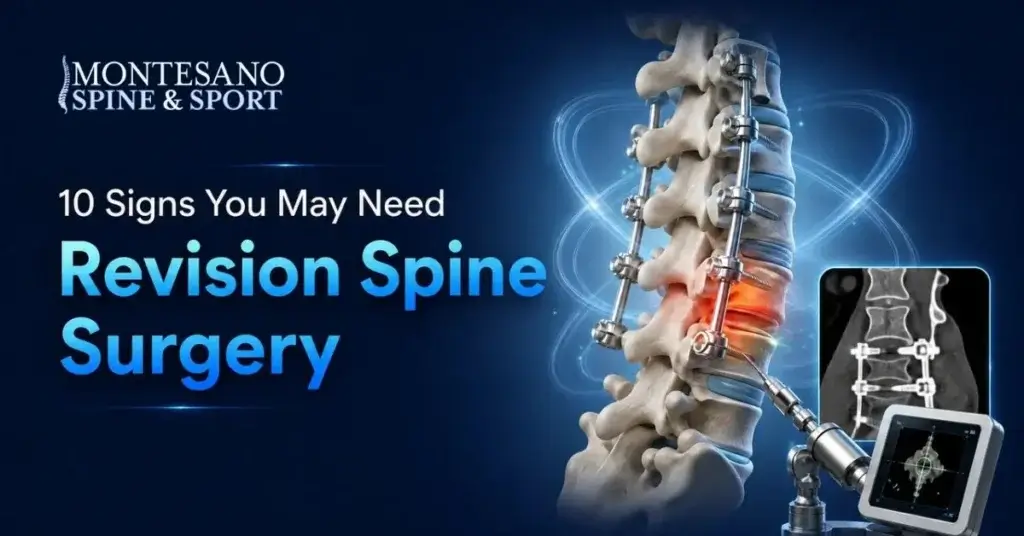
Warning signs that you may need revision spine surgery include pain that returns after initial relief, new numbness or weakness, clicking or grinding at the surgical site, and a feeling of instability in the neck or back. For cervical fusion specifically, symptoms of a failed fusion often include returning neck or arm pain, headaches at the base of the skull, and reduced range of motion months after surgery. These signs do not always mean surgery has failed, but they are worth a prompt evaluation.
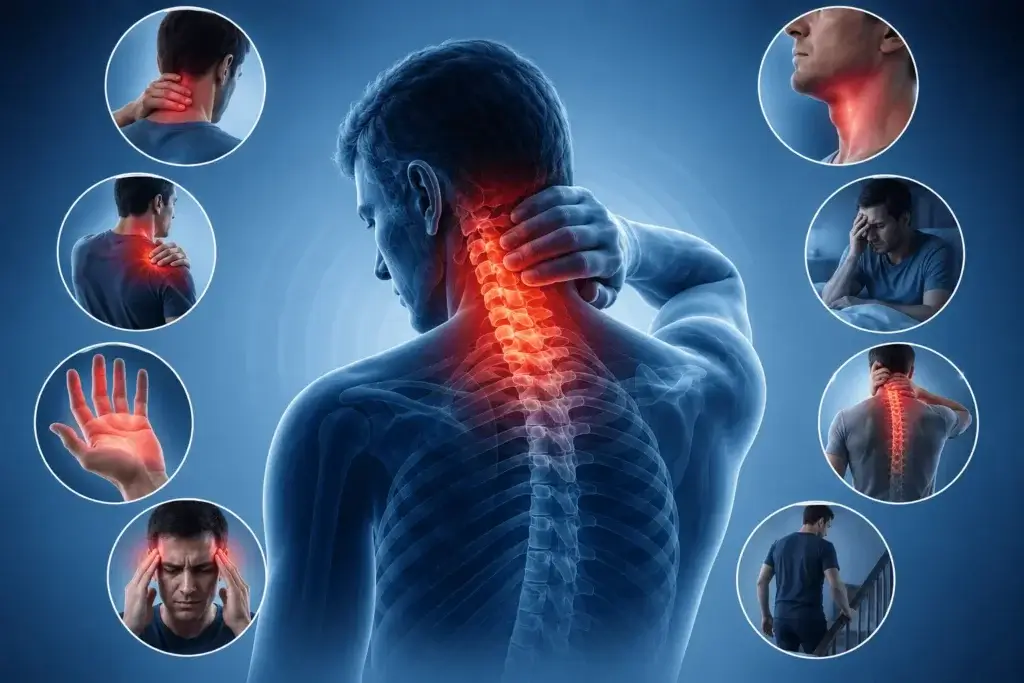
Most spinal fusions succeed and deliver lasting relief, but a small percentage of patients develop new or returning symptoms months or years later. Recognizing these signs early makes a real difference, since catching a problem while it is still manageable often means a simpler fix than waiting until symptoms become severe. This article covers the 10 most common signs that a spinal fusion may not have healed as intended, with a closer look at how these signs show up specifically after cervical fusion surgery. It also explains what typically causes these problems and what Montesano Spine & Sports considers before recommending any next step.
Signs of a Failed Fusion
| Aspect | Details |
| Most Common Sign | Pain that returns after initial post-surgical relief |
| Cervical-Specific Signs | Neck or arm pain, headaches, clicking, reduced range of motion |
| Time Frame for Concern | Symptoms lasting or returning beyond 6 to 12 months |
| Common Underlying Causes | Pseudarthrosis, hardware failure, adjacent segment disease, infection |
| First Step | Physical exam plus imaging such as X-ray or CT scan |
| First-Line Treatment | Bracing, physical therapy, and addressing modifiable risk factors |
| When Surgery Is Considered | Confirmed structural problem with symptoms that do not improve |
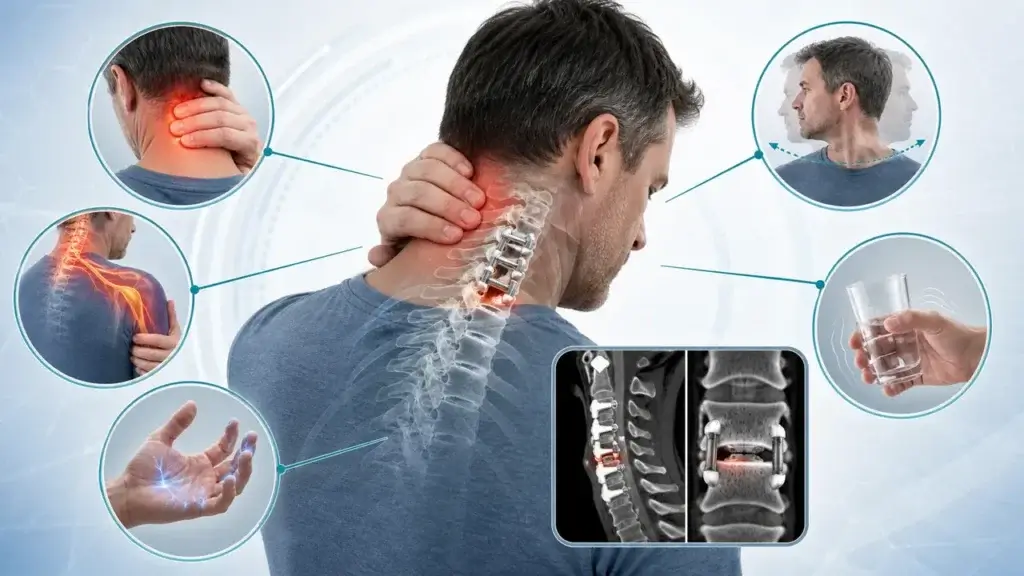
1. Pain That Returns After a Period of Relief
Many patients feel meaningfully better in the weeks following fusion surgery, only to notice their original pain creeping back months later. This pattern, sometimes called a “honeymoon period” followed by relapse, often points to the fusion not fully solidifying or to a new problem developing at a different level.
Key Takeaway: Pain that fades after surgery and then returns is one of the clearest signals that something may not have healed as expected.
2. Pain That Never Fully Improved
Some patients notice little to no improvement at all after surgery, even in the earliest recovery weeks. While some post-surgical discomfort is expected initially, pain that stays essentially unchanged from before surgery suggests the procedure may not have addressed the underlying problem, or that a technical issue occurred during the original surgery.
Key Takeaway: A lack of any meaningful improvement after fusion is different from slow healing and deserves evaluation rather than more waiting.
3. New Numbness, Tingling, or Weakness
Numbness, tingling, or weakness that appears after surgery, especially if it was not present before, often signals that a nerve is being irritated or compressed again. This can result from hardware shifting, scar tissue formation, or a new disc problem at a level adjacent to the fusion.
Key Takeaway: New neurological symptoms after fusion should never be dismissed, since they often point directly to a nerve-related complication.
4. A Feeling of Instability
Some patients describe a sense that their neck or back is not fully supported, or that it feels like it could “give way” during normal movement. This sensation is commonly associated with incomplete fusion, since the segment that was meant to become one solid piece of bone still retains some motion.
Key Takeaway: A sense of spinal instability, rather than pain alone, is a distinct warning sign that the fusion segment may still be moving.
5. Clicking, Popping, or Grinding at the Surgical Site
Audible or palpable clicking near the fusion site can indicate that hardware has loosened or that the bones have not fully united. While occasional joint sounds elsewhere in the body are usually harmless, new sounds localized to a previous fusion site warrant closer attention.
Key Takeaway: Clicking or grinding specifically at a fusion site is different from normal joint noise and is worth mentioning to your surgeon.
6. Reduced Range of Motion or Increased Stiffness
A properly healed fusion typically allows a predictable, stable range of motion. Increasing stiffness, or motion that feels more restricted than expected months after surgery, can suggest scar tissue buildup, hardware issues, or compensatory strain on nearby segments.
Key Takeaway: Progressive stiffness beyond the expected recovery window is a sign worth discussing at a follow-up visit.
7. Pain or Symptoms at a Different Spinal Level
Sometimes the original surgical site feels fine, but new pain develops one level above or below it. This is known as adjacent segment disease, and it happens because a fused segment shifts more mechanical load onto the neighboring vertebrae over time.
Key Takeaway: New pain at a different spinal level than the original surgery is a distinct pattern, separate from the fusion site itself, called adjacent segment disease.
8. Fever, Redness, or Drainage Near the Incision
While less common than mechanical symptoms, fever, redness, warmth, or drainage near the surgical site can indicate infection, which requires prompt medical attention. Infection can also interfere with the fusion process itself if not treated quickly.
Key Takeaway: Signs of infection at the surgical site are a more urgent concern and should be evaluated right away rather than monitored at home.
9. Difficulty Swallowing or Voice Changes After Cervical Fusion
This symptom is specific to cervical fusion performed from the front of the neck, such as an ACDF. Persistent difficulty swallowing, a hoarse voice, or a choking sensation that does not resolve within the expected recovery window can indicate hardware prominence or irritation near the esophagus or vocal cord nerves.
Key Takeaway: Swallowing difficulty or voice changes that persist well beyond initial recovery are specific red flags after anterior cervical fusion.
10. Headaches at the Base of the Skull After Cervical Fusion
Cervicogenic headaches, meaning headaches that originate in the neck, are common after cervical fusion that has not fully stabilized. These headaches often start at the base of the skull and can worsen with certain neck movements, distinguishing them from ordinary tension headaches.
Key Takeaway: New or worsening headaches at the base of the skull after cervical fusion often trace back to the neck rather than a separate headache disorder.
Symptoms of Failed Cervical Fusion: A Closer Look
Cervical fusion carries some symptom patterns worth understanding on their own, since the neck’s anatomy and function differ from the lumbar spine. Common warning signs specific to cervical fusion include:
• Returning or new neck pain, sometimes radiating into the shoulder or arm
• Arm pain, numbness, or weakness suggesting a nerve is affected
• Headaches originating from the base of the skull
• A clicking or grinding sensation when turning the head
• Persistent swallowing difficulty or voice changes
• Reduced neck range of motion compared to the initial post-surgical recovery
Key Takeaway: Cervical fusion failure most often announces itself through the same nerve pathways the original surgery was meant to protect.
What Causes a Fusion to Fail?
Several underlying issues can explain why these signs appear after fusion surgery:
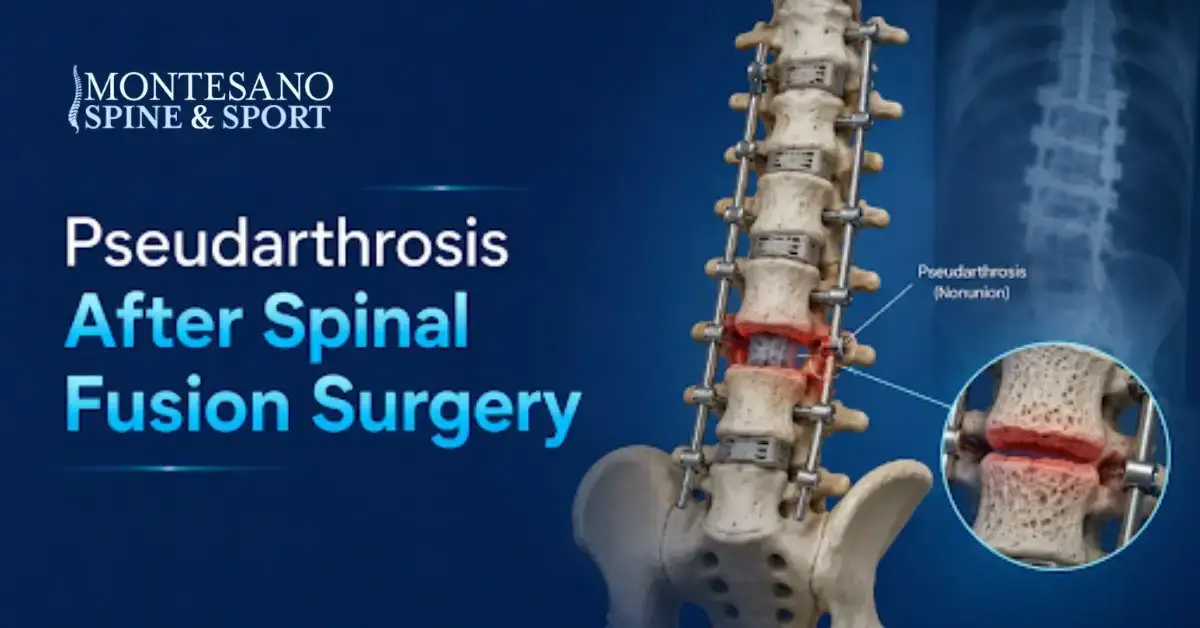
• Pseudarthrosis, meaning the bone never fully grew together into a solid mass
• Hardware failure, such as a loosened, broken, or shifted screw or rod
• Adjacent segment disease, where levels next to the fusion take on added stress
• Infection at or near the surgical site
• Scar tissue formation that irritates nearby nerves
• Incorrect hardware placement or inadequate bone preparation during the original surgery
Key Takeaway: Pseudarthrosis and hardware failure are among the most common underlying reasons a fusion produces ongoing or new symptoms.
How Is a Failed Fusion Diagnosed?
Diagnosis starts with a detailed history and physical exam, including a review of when symptoms started and how they have changed over time. Imaging is essential to confirm what is happening structurally. X-rays are often the first step, though a CT scan generally provides a clearer view of whether the bone has fully fused. In select cases, advanced imaging such as SPECT-CT can help clarify results that remain uncertain on standard imaging. Dr. Pasquel Montesano combines physical examination findings with imaging before recommending any treatment path, since symptoms alone do not always confirm the underlying cause.
Key Takeaway: Imaging, particularly CT scans, plays a central role in confirming whether a fusion has actually failed rather than relying on symptoms alone.
Treatment Options Before Considering Revision Surgery
Montesano Spine & Sports prioritizes conservative treatment whenever it is medically appropriate. Depending on what imaging and examination reveal, treatment options may include:
• Physical therapy to support surrounding muscles and improve stability
• Bracing to limit motion at the affected segment
• Pain management strategies while the underlying issue is addressed
• Addressing modifiable risk factors, such as smoking cessation
• Targeted injections for nerve-related symptoms in select cases
• Revision surgery when a structural problem is confirmed and conservative care has not resolved symptoms
Revision surgery is not the default response to these warning signs. It becomes a serious consideration mainly when imaging confirms a clear structural cause, such as significant hardware failure or nerve compression, and symptoms have not responded to non-surgical care.
Key Takeaway: Most patients begin with conservative treatment, and revision surgery is reserved for confirmed structural problems that do not improve with non-surgical care.
When to See a Doctor
Any of the 10 signs described above deserves a conversation with your physician, even if the symptom seems mild or intermittent. Seek prompt evaluation if you notice worsening neurological symptoms, fever or drainage near the incision, or new difficulty swallowing or breathing after a cervical procedure, since these can indicate a more urgent problem. For symptoms that develop gradually, scheduling a follow-up evaluation rather than waiting for the next routine visit allows any issue to be caught while options remain simpler.
Key Takeaway: Prompt evaluation, rather than a wait-and-see approach, gives patients the best chance at a straightforward solution if a fusion has not healed as expected.
Conclusion
Recognizing the signs of a struggling fusion, whether it is returning pain, new numbness, clicking hardware, or cervical-specific symptoms like swallowing difficulty and base-of-skull headaches, is the first step toward getting the right care. Not every symptom means another surgery is needed, and many cases respond well to conservative treatment once the underlying cause is identified. Getting an accurate diagnosis through physical exam and imaging remains the most reliable way to understand what is actually happening and what to do next.
Request an Appointment
If you are noticing any of these signs after spinal fusion surgery, Dr. Pasquel Montesano can help determine what is happening and guide you toward the right next step. Request an appointment at our Sarasota office to get started.