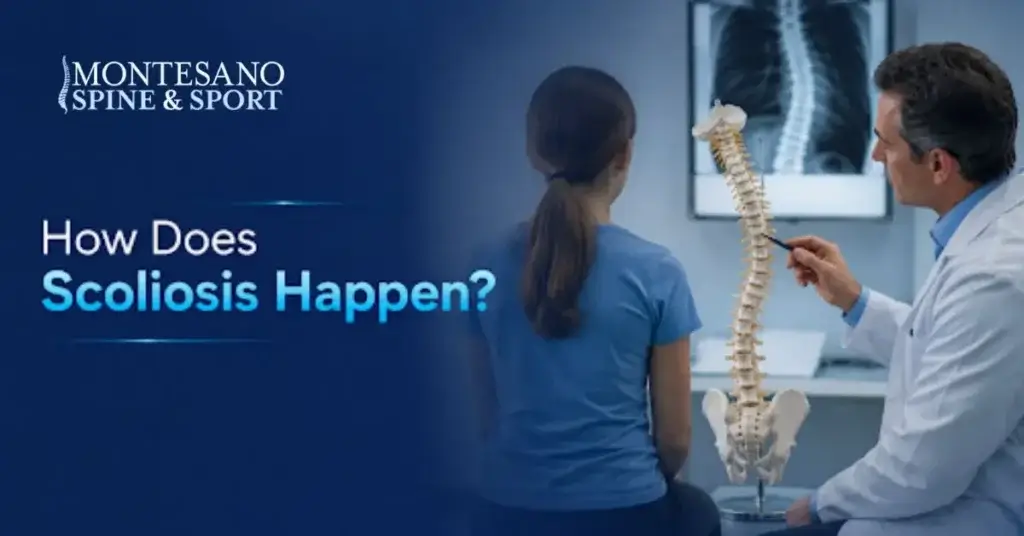
Scoliosis happens when the spine develops an abnormal sideways curve that can appear in the shape of the letter “S” or “C.” While a healthy spine looks straight when viewed from behind, scoliosis causes the vertebrae to rotate and curve, which may affect posture, balance, and movement. In many people, especially children and teenagers, the exact reason why scoliosis develops is unknown. However, some cases are linked to congenital conditions, nerve or muscle disorders, injuries, or age-related changes in the spine.
Understanding how scoliosis happens is important because early detection often leads to better treatment outcomes. This guide explains the causes, symptoms, risk factors, diagnosis, treatment options, and ways to manage scoliosis. Whether you are concerned about your child or looking for answers about your own spinal health, this article provides practical and medically accurate information.
What Is Scoliosis?
Scoliosis is a condition in which the spine curves sideways more than normal. Instead of remaining straight, the spine forms a noticeable curve that may affect the upper back, middle back, or lower back. The severity of scoliosis varies from person to person. Some people have only a mild curve that requires monitoring, while others develop a more significant curve that needs treatment.
Although scoliosis is commonly diagnosed during childhood or adolescence, it can develop at any age. Adults may experience scoliosis because of spinal degeneration, osteoporosis, or previous spinal conditions. Not every spinal curve causes pain, but severe curves can affect posture, breathing, and daily activities if left untreated.
Key Takeaway: Scoliosis is a sideways curvature of the spine that ranges from mild to severe and can affect people of all ages.
Quick Facts About Scoliosis
| Fact | Details |
| Condition | Sideways curvature of the spine |
| Spine Shape | S-shaped or C-shaped |
| Most Common Age | 10 to 18 years |
| Can Adults Get It? | Yes |
| Common Symptoms | Uneven shoulders, uneven hips, back pain, visible spinal curve |
| Treatment | Observation, bracing, physical therapy, surgery |
How Does Scoliosis Happen?
Scoliosis happens when the vertebrae begin to curve sideways and rotate instead of remaining aligned in a straight line. This change may occur during periods of rapid growth, before birth, or later in life because of spinal degeneration. In many adolescents, the condition develops without a clearly identifiable cause, which is known as idiopathic scoliosis.
Several factors can contribute to the development of scoliosis. Some children are born with spinal bones that do not form correctly during pregnancy. Others develop scoliosis because muscles and nerves cannot properly support the spine. Adults may experience scoliosis as the discs and joints in the spine gradually wear down with age, causing the spine to shift out of alignment.
The curve can remain stable, progress slowly, or worsen during growth spurts. This is why regular monitoring is recommended for children and teenagers with mild scoliosis.
Key Takeaway: Scoliosis develops when the spine curves sideways because of abnormal spinal growth, congenital changes, nerve or muscle conditions, or age-related degeneration.
Types of Scoliosis
Understanding the type of scoliosis helps determine the most appropriate treatment plan.
Idiopathic Scoliosis
Idiopathic scoliosis is the most common form and accounts for most cases in children and teenagers. Doctors do not know the exact cause, although genetics are believed to play an important role. This type often appears during puberty when the body is growing quickly.
Characteristics
- Unknown cause
- Most common in adolescents
- May run in families
- Often discovered during school screenings or routine checkups
Key Takeaway: Idiopathic scoliosis is the most common type and usually develops during periods of rapid growth.
Congenital Scoliosis
Congenital scoliosis develops before birth when the vertebrae do not form properly during fetal development. The abnormal bone structure causes the spine to curve as the child grows. Early diagnosis allows healthcare providers to monitor spinal growth and determine whether treatment is needed.
Key Takeaway: Congenital scoliosis is present at birth because of abnormal spinal development.
Neuromuscular Scoliosis
Neuromuscular scoliosis occurs when conditions affecting the muscles or nerves reduce the spine’s ability to remain properly aligned. Weak muscles and poor spinal support allow the curve to become more noticeable over time.
Conditions commonly associated include:
- Cerebral palsy
- Muscular dystrophy
- Spinal muscular atrophy
- Spinal cord disorders
Key Takeaway: Neuromuscular scoliosis develops because muscles and nerves cannot adequately support the spine.
Degenerative Scoliosis
Degenerative scoliosis mainly affects older adults. As spinal discs wear down and joints become arthritic, the spine gradually shifts out of alignment. This type often develops alongside chronic back pain and stiffness.
Key Takeaway: Degenerative scoliosis results from age-related changes in the spine.
What Causes Scoliosis?
The exact cause depends on the type of scoliosis. While many cases have no known cause, several factors may contribute.
| Cause | Description |
| Genetics | Family history increases risk |
| Congenital abnormalities | Vertebrae develop abnormally before birth |
| Neuromuscular disorders | Weak muscles fail to stabilize the spine |
| Degenerative changes | Age-related wear affects spinal alignment |
| Spinal injuries | Trauma may alter spinal structure |
| Rare tumors or infections | Can occasionally cause spinal curvature |
Key Takeaway: Most cases of scoliosis are idiopathic, but genetics, birth defects, neurological conditions, and aging can also play important roles.
Who Is at Risk?
Several factors increase the likelihood of developing scoliosis.
- Family history of scoliosis
- Female sex, especially for progressive adolescent scoliosis
- Rapid growth during puberty
- Congenital spinal abnormalities
- Neurological or muscular disorders
- Older age due to spinal degeneration
People with one or more risk factors should have regular medical evaluations, especially during childhood growth spurts.
Key Takeaway: Family history, rapid growth, and certain medical conditions increase the risk of scoliosis.
Common Symptoms of Scoliosis
Symptoms depend on the size and location of the spinal curve. Mild scoliosis may not cause noticeable discomfort, while larger curves can affect posture and movement.
Common symptoms include:
- Uneven shoulders
- One shoulder blade sticking out more than the other
- Uneven waist
- One hip higher than the other
- Leaning to one side
- Back pain, especially in adults
- Muscle fatigue after standing for long periods
- Difficulty breathing in severe cases
Key Takeaway: Uneven posture is often the earliest sign of scoliosis, while severe curves may lead to pain and breathing problems.
Conclusion
Scoliosis is a condition that causes the spine to curve sideways, and it can affect both children and adults. While the exact cause is unknown in many cases, early diagnosis and regular monitoring play an important role in preventing the curve from worsening. Treatment depends on the severity of the condition and may include observation, physical therapy, bracing, or surgery. Most people with scoliosis can continue to live active and healthy lives with the right care and support. If you notice changes in posture, uneven shoulders, or persistent back pain, consult a healthcare provider for a proper evaluation and personalized treatment plan.
Request an Appointment
If you are living with back pain and want to explore safe and effective treatment options, the team at Montesano Spine & Sport is here to help.
Call +1 941-402-4003 to schedule your consultation and take the first step toward a more comfortable and active life.