


Quick Answer: Sciatica has no medically defined final stage. People usually use the phrase last stages of sciatica to describe either gradual recovery, when leg pain retreats and function returns, or persistent nerve compression, when numbness, weakness, or severe pain continues. Progressive weakness or bladder, bowel, or saddle-sensation changes require urgent care.
Sciatica describes pain or neurologic symptoms caused by irritation of a lumbar or sacral nerve root. It is a symptom pattern, not a disease with a fixed sequence of stages. Understanding whether symptoms are improving, plateauing, or becoming neurologically worse is more useful than assigning a stage number.
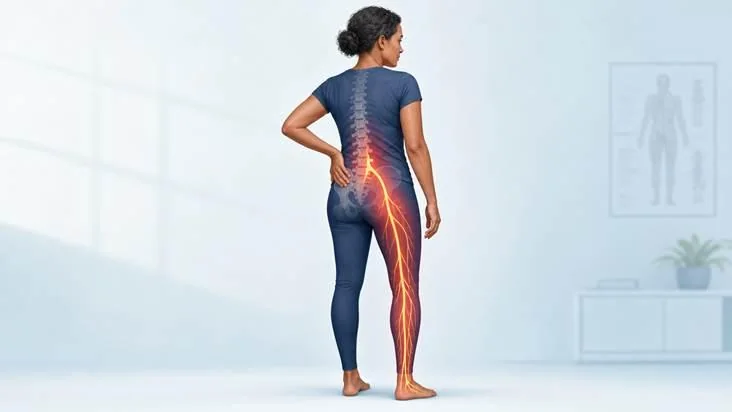
Key takeaway: Sciatica should be tracked by pain distribution, strength, sensation, and function rather than by an unofficial stage label.
Sciatica Recovery at a Glance
| Pattern | What it may mean | Reasonable next step |
|---|---|---|
| Leg pain is shorter or less intense | Often consistent with improvement | Continue graded activity and the agreed care plan |
| Pain fluctuates after activity | May reflect an irritated but recovering nerve | Adjust dose, avoid prolonged bed rest, monitor function |
| Numbness remains but strength is stable | Sensory recovery may lag | Discuss at follow-up if persistent or expanding |
| Weakness is worsening | Possible ongoing nerve compromise | Obtain prompt clinical assessment |
| Bladder, bowel, or saddle changes | Possible cauda equina syndrome | Seek emergency evaluation |
Key takeaway: Stable or improving function supports recovery, while new neurologic loss changes the urgency.
What People Mean by the Last Stages of Sciatica
A Recovery Phase
During recovery, sharp leg pain may become intermittent, travel a shorter distance, or concentrate closer to the buttock and low back. Walking, sitting, and sleep often become easier. A temporary flare after doing more activity does not automatically mean new damage if it settles and strength remains stable.
A Persistent or Progressive Phase
For other people, the phrase refers to symptoms that have not improved after conservative care. Persistent numbness, repeated severe flares, limited walking, or weakness may indicate that the underlying nerve compression remains important. The next step is reassessment, not simply waiting for a supposed final stage.

Key takeaway: The same phrase can describe healing or deterioration, so symptom direction and neurologic function must be stated clearly.
Signs Sciatica May Be Healing
Common signs of improvement include reduced leg-pain intensity, fewer nighttime awakenings, longer walking tolerance, easier transitions from sitting to standing, and less need to change position. Symptoms that move away from the foot and toward the back can be encouraging, although this pattern is not universal.
Pins-and-needles or a small numb patch may resolve more slowly than pain. Nerves recover at different rates, and symptom timing varies with the cause and duration of compression. Track what you can do, such as heel raises, toe walking, normal gait, and daily activity, rather than relying only on a pain score.

Key takeaway: Recovery is best recognized by less distal pain and better daily function, even if mild sensory symptoms linger.
Signs the Nerve May Still Be Compressed
Prompt reassessment is appropriate when weakness appears or progresses, the foot slaps while walking, the knee buckles, or standing and walking tolerance steadily decline. Persistent pain alone can be severe, but motor loss is especially important because it may change the treatment timeline.
Common causes include a lumbar disc herniation, spinal stenosis, degenerative change, and vertebral slippage. SpineDocs’ sciatica overview explains how symptom location can relate to the affected nerve.
Key takeaway: Worsening strength, gait, or walking capacity deserves more attention than a fluctuating pain score alone.
Emergency Warning Signs
Seek emergency evaluation for new trouble starting or controlling urination, loss of bowel control, numbness around the genitals or inner thighs, severe symptoms in both legs, or rapidly increasing leg weakness. These can signal cauda equina syndrome or another serious condition that should not wait for a routine appointment.
Fever, immune suppression, recent serious infection, cancer history, major trauma, or unexplained weight loss also changes the risk assessment. Do not drive yourself if leg control is impaired. Call emergency services when safe transport or rapid evaluation is needed.
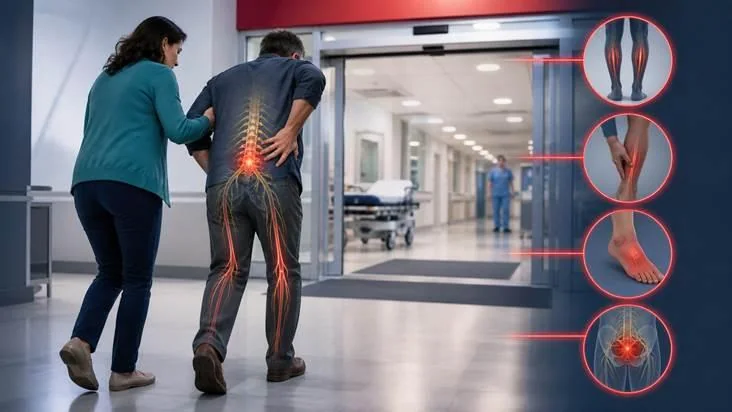
Key takeaway: Bladder, bowel, saddle-sensation, or rapidly progressive motor changes are emergencies, not a normal last stage.
How Clinicians Evaluate Persistent Sciatica
Evaluation begins with symptom history and a neurologic examination of strength, sensation, reflexes, gait, and tension signs. MRI may be useful when symptoms persist despite appropriate care, when weakness is present, when red flags exist, or when an injection or surgery is being considered. Imaging must match the side and nerve pattern.
Learn more about SpineDocs’ approach to spine diagnosis. The examination helps distinguish nerve-root pain from hip disease, peripheral neuropathy, sacroiliac pain, and other conditions that can mimic sciatica.

Key takeaway: A matching history, neurologic examination, and imaging finding is stronger evidence than any one test alone.
Treatment When Sciatica Is Not Resolving
Care may include graded activity, medication when safe, physical therapy, and an image-guided epidural steroid injection for selected radicular pain. An injection may reduce inflammation temporarily but does not remove structural compression. Persistent disabling pain or progressive weakness can justify a surgical consultation.
SpineDocs describes both pain-management options and minimally invasive spine surgery. The choice depends on cause, duration, function, examination, imaging, health status, and patient goals.
Key takeaway: Escalation is based on neurologic risk and functional limitation, not on reaching an arbitrary stage.
Best Practices
- Track walking, sleep, sitting tolerance, and strength alongside pain.
- Keep moving within tolerable limits unless a clinician gives a specific restriction.
- Use prescribed exercises consistently and report movements that clearly worsen leg symptoms.
- Bring symptom notes and prior imaging to follow-up visits.
Key takeaway: Consistent function tracking gives clinicians more useful information than isolated pain ratings.
Common Mistakes
- Assuming numbness means the nerve is permanently damaged.
- Ignoring new weakness because pain has decreased.
- Using prolonged bed rest as the main treatment.
- Waiting for a final stage despite bladder, bowel, or saddle changes.
- Treating an MRI finding without confirming it matches symptoms.
Key takeaway: The greatest mistakes are overlooking neurologic change and treating the stage label as a diagnosis.
Conclusion
The last stages of sciatica are not a fixed medical phase. Recovery often brings less leg pain and better function, while persistent or worsening weakness suggests unresolved nerve compromise. Monitor trends, keep appropriate follow-up, and seek emergency care for bladder, bowel, saddle-sensation, or rapidly progressive motor changes.
Key takeaway: Use symptom direction and neurologic function, not an unofficial stage label, to decide what care is needed.
Resources and References
- ADR Spine: Last Stages of Sciatica
- EmergeOrtho: Last Stages of Sciatica Treatment
- Washington Pain and Spine: Last Stages of Sciatica
- Mayo Clinic: Sciatica
- NICE Guideline NG59: Low Back Pain and Sciatica
- American College of Radiology: Low Back Pain
Key takeaway: These sources support the symptom, warning-sign, diagnostic, and treatment distinctions used here.
Request an Appointment
Ready to discuss your symptoms or treatment options? Request an appointment with SpineDocs | Montesano Spine & Sport for an individualized evaluation.