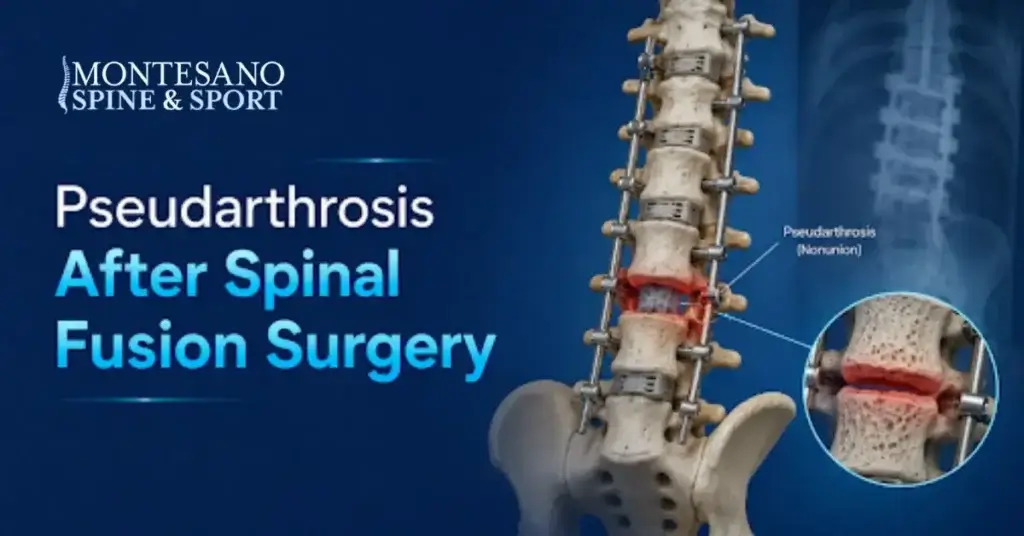
Spinal fusion surgery is one of the most effective treatments for conditions such as degenerative disc disease, spinal instability, scoliosis, spinal fractures, and chronic back or neck pain. The goal of the procedure is to permanently join two or more vertebrae together so they heal into one solid bone. While most spinal fusion surgeries heal successfully, there are cases where the bones fail to fuse as intended. This condition is known as pseudarthrosis, which is often referred to as a failed spinal fusion, spinal fusion failure, or nonunion after spinal fusion.
When pseudarthrosis develops, movement continues between the vertebrae instead of creating a stable fusion. This can result in ongoing pain, reduced mobility, hardware complications, and a return of symptoms that surgery was intended to relieve. Understanding the causes, warning signs, and treatment options is important for anyone recovering from spinal fusion surgery. At Montesano Spine & Sport, we help patients identify the source of persistent pain and explore effective solutions to restore spinal stability and function.
Key Takeaway: Pseudarthrosis occurs when the spine does not heal properly after fusion surgery, resulting in an incomplete fusion that may cause pain and instability.
What Is Pseudarthrosis After Spinal Fusion Surgery?
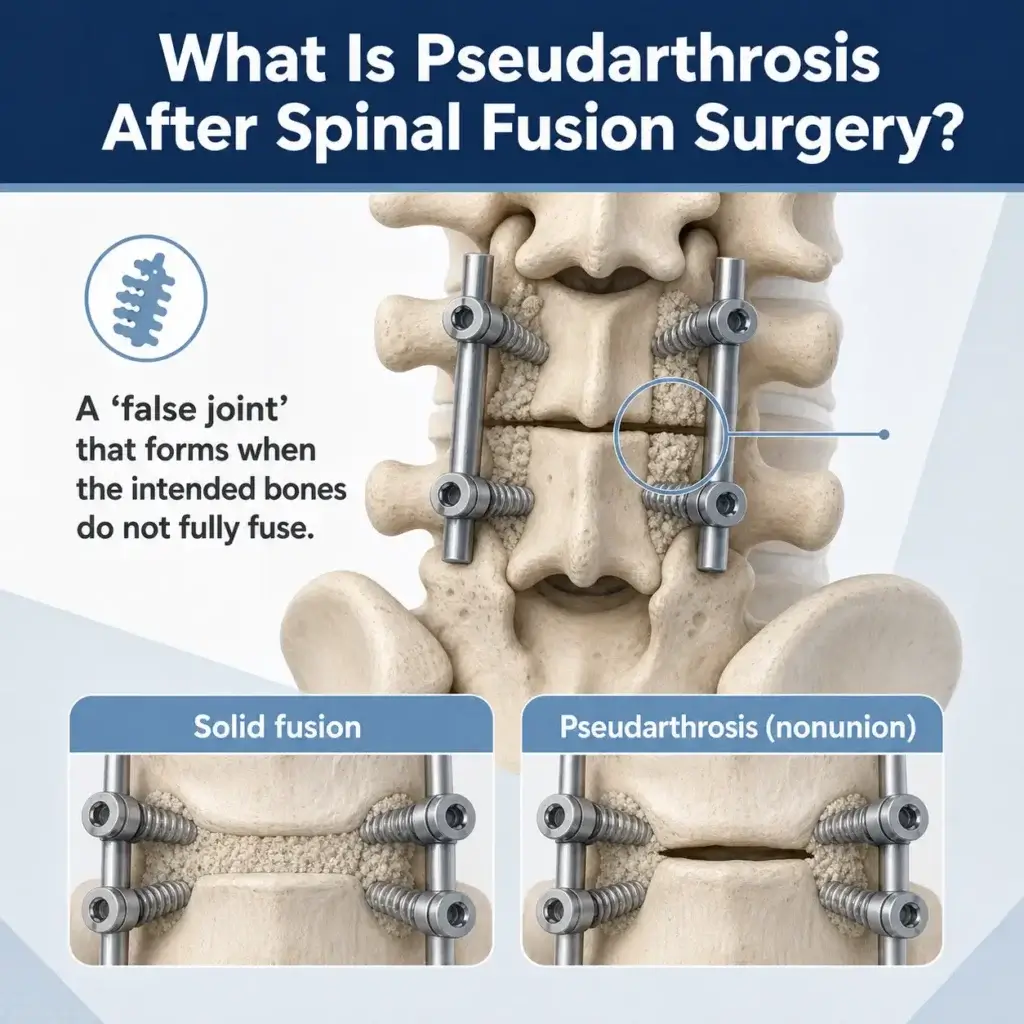
Pseudarthrosis is a medical term that means “false joint.” After spinal fusion surgery, the vertebrae should gradually grow together through a natural bone-healing process. When that healing process fails, the bones remain separate and continue to move. This abnormal movement creates a false joint at the fusion site, preventing the spine from becoming fully stable.
The condition can occur in the cervical spine, thoracic spine, or lumbar spine. Some patients develop symptoms within a few months of surgery, while others may not notice problems until a year or more later. Because spinal hardware is designed to support the spine during healing rather than permanently replace bone fusion, incomplete healing can place excessive stress on implants and surrounding structures.
| Successful Fusion | Pseudarthrosis |
| Bones heal into one solid structure | Bones fail to unite completely |
| Stable spinal segment | Persistent movement between vertebrae |
| Pain improves over time | Pain may continue or return |
| Hardware supports healed fusion | Hardware may loosen or break |
| Improved function and mobility | Ongoing instability and discomfort |
Key Takeaway: Pseudarthrosis is a failure of bone healing after spinal fusion, leading to continued motion where solid fusion should exist.
Why Does Pseudarthrosis Happen?
Successful spinal fusion depends on several factors working together. Bone cells must create new bone tissue, blood supply must remain adequate, and the surgical area must remain stable long enough for fusion to occur. If any part of this process is disrupted, healing may slow down or stop completely.
Lifestyle habits, medical conditions, and surgical factors can all influence bone healing. Smoking is one of the most significant risk factors because nicotine restricts blood flow and interferes with bone growth. Conditions such as diabetes, osteoporosis, and poor nutrition can also affect the body’s ability to create strong new bone. In some cases, larger or more complex fusion procedures naturally have a higher risk of nonunion.
Key Takeaway: Bone healing after spinal fusion requires stability, healthy bone growth, and proper blood supply to achieve a successful fusion.
Common Causes and Risk Factors for Failed Spinal Fusion
Several factors can increase the likelihood of developing pseudarthrosis after surgery. Understanding these risks can help patients and surgeons take preventive measures before and after the procedure.
Common Risk Factors
- Smoking and nicotine use
- Osteoporosis or poor bone quality
- Diabetes
- Obesity
- Advanced age
- Multi-level spinal fusion
- Previous spine surgery
- Long-segment fusion procedures
- Chronic steroid use
- Poor nutrition
- Vitamin D deficiency
- Infection following surgery
- Excessive physical activity during recovery
| Risk Factor | Impact on Fusion Healing |
| Smoking | Reduces blood flow and bone growth |
| Osteoporosis | Weakens bone structure |
| Diabetes | Slows tissue healing |
| Obesity | Places extra stress on the spine |
| Poor Nutrition | Limits bone-building nutrients |
| Multi-Level Fusion | Increases healing demands |
| Infection | Interrupts normal recovery |
Patients with multiple risk factors may require closer monitoring during recovery to ensure fusion is progressing appropriately.
Key Takeaway: Smoking, poor bone health, and complex spinal procedures are among the most common contributors to spinal fusion failure.
Symptoms of Pseudarthrosis After Spinal Fusion
The symptoms of pseudarthrosis often resemble the symptoms that led to surgery in the first place. Many patients initially feel improvement after surgery but begin experiencing discomfort again as the fusion fails to heal completely.
Common symptoms include:
- Persistent neck pain or back pain
- Pain that worsens with activity
- Recurring leg pain or arm pain
- Muscle spasms
- Stiffness and limited movement
- Difficulty standing or walking for extended periods
- Clicking or grinding sensations in the spine
- Numbness or tingling
- Weakness in the arms or legs
- Ongoing need for pain medication
The severity of symptoms can vary. Some patients experience only mild discomfort, while others develop significant pain that interferes with daily activities.
Key Takeaway: Persistent or returning pain after spinal fusion may be a warning sign that fusion has not fully healed.
How Do You Know If Spinal Fusion Failed?
Many patients ask how they can tell whether their spinal fusion has healed properly. While symptoms provide important clues, imaging studies are usually needed to confirm the diagnosis.
Signs that may suggest a failed spinal fusion include:
- Pain that returns months after surgery
- Continued spinal instability
- Lack of improvement in symptoms
- Broken or loosened hardware
- Persistent nerve-related symptoms
- Difficulty performing everyday activities
A thorough evaluation by a spine specialist can determine whether symptoms are related to pseudarthrosis or another spinal condition.
Key Takeaway: Symptoms alone cannot confirm pseudarthrosis, which is why imaging and specialist evaluation are important.
Diagnosing Pseudarthrosis
Accurate diagnosis begins with a comprehensive medical history and physical examination. A spine specialist will evaluate symptoms, review prior imaging, and assess spinal function.
Several imaging tests may be used:
| Diagnostic Test | Purpose |
| X-rays | Evaluate alignment and hardware |
| Flexion-Extension X-rays | Detect abnormal motion |
| CT Scan | Best test for confirming fusion status |
| MRI | Assess nerves and soft tissues |
| Bone Scan | Occasionally used in complex cases |
A CT scan is generally considered the most reliable method for identifying pseudarthrosis because it provides detailed images of bone healing and fusion development.
Key Takeaway: CT scanning is often the gold standard for diagnosing pseudarthrosis after spinal fusion surgery.
Treatment Options for Pseudarthrosis
Treatment depends on the severity of symptoms, the degree of instability, and the patient’s overall health.
Non-Surgical Treatment
Patients with mild symptoms may benefit from conservative treatment options that focus on symptom management and spinal support.
Non-Surgical Treatments Include:
- Physical therapy
- Pain management
- Anti-inflammatory medications
- Activity modification
- Bone growth stimulation
- Lifestyle improvements
- Smoking cessation
These treatments may help reduce symptoms while monitoring the fusion site for signs of healing.
Key Takeaway
Non-surgical treatment may be appropriate when symptoms are mild and spinal stability remains acceptable.
Revision Spinal Fusion Surgery
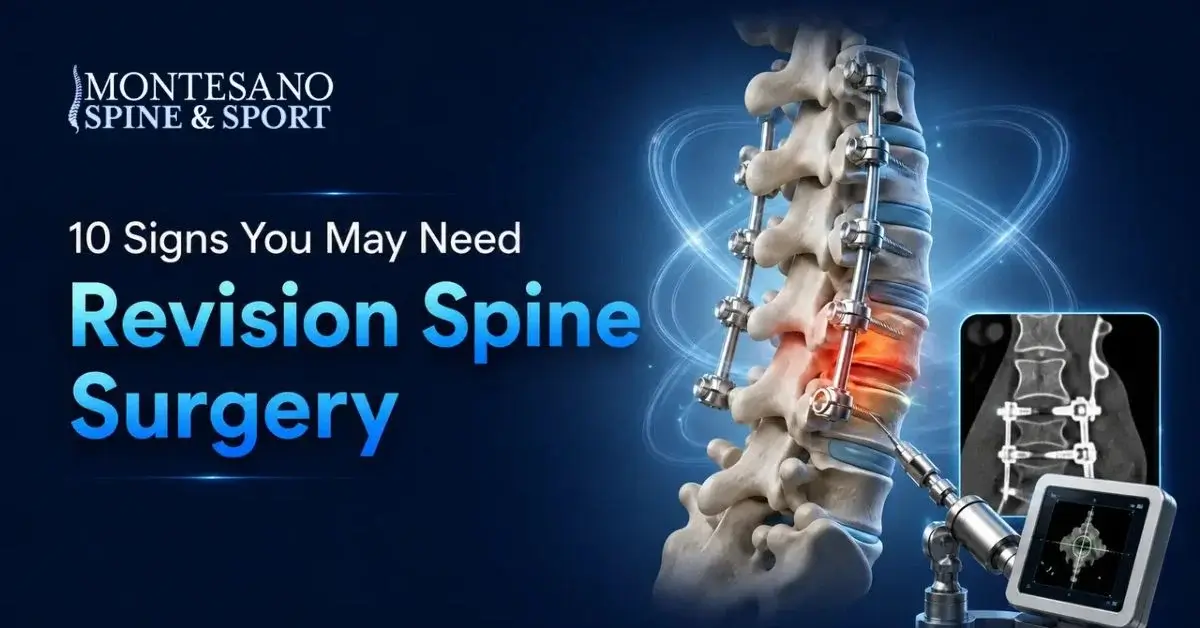
When significant instability, persistent pain, or hardware failure develops, revision surgery may be necessary. Revision spinal fusion is designed to create a stronger and more reliable fusion environment.
The procedure may involve:
- Removing failed hardware
- Replacing screws or rods
- Adding additional bone graft material
- Improving spinal alignment
- Stabilizing additional vertebral levels if needed
Advances in minimally invasive spine surgery may help reduce tissue disruption and improve recovery for selected patients.
| Non-Surgical Treatment | Surgical Treatment |
| Physical Therapy | Revision Fusion |
| Bone Stimulator | Hardware Replacement |
| Medication | New Bone Grafting |
| Activity Modification | Enhanced Stabilization |
Key Takeaway: Revision spinal fusion may be recommended when conservative treatments cannot address persistent instability or pain.
Recovery After Revision Surgery
Recovery varies based on the complexity of the procedure and the patient’s overall health. Most patients experience gradual improvement over several months, though complete bone healing can take six to twelve months or longer.
Recovery often includes:
- Activity restrictions
- Physical therapy
- Follow-up imaging
- Nutritional support
- Smoking avoidance
- Progressive strengthening exercises
Following postoperative instructions closely is one of the most important factors in achieving a successful outcome.
Key Takeaway: Recovery after revision surgery requires patience, consistent follow-up, and commitment to the healing process.
Can Pseudarthrosis Be Prevented?
Although not every case can be prevented, several strategies can significantly improve the chances of a successful spinal fusion.
Prevention Tips
- Stop smoking before surgery
- Maintain a healthy weight
- Control diabetes
- Improve bone density when needed
- Follow activity restrictions
- Attend all follow-up appointments
- Eat a nutrient-rich diet
- Take prescribed supplements if recommended
Patients who actively participate in their recovery often experience better long-term outcomes.
Key Takeaway: Healthy lifestyle choices before and after surgery can reduce the risk of pseudarthrosis and improve healing.
What Happens If Pseudarthrosis Is Left Untreated?
Untreated pseudarthrosis can lead to ongoing pain and progressive spinal problems. Continued motion at the fusion site may place excessive stress on hardware and adjacent spinal segments.
Potential complications include:
- Chronic neck pain
- Hardware loosening
- Broken spinal fusion hardware
- Nerve compression
- Progressive spinal instability
- Reduced quality of life
- Adjacent segment disease
Seeking evaluation early can help prevent more serious complications from developing.
Key Takeaway: Early diagnosis and treatment can help prevent worsening symptoms and long-term spinal damage.
Frequently Asked Questions
Can pseudarthrosis heal without surgery?
Some mild cases may improve with conservative treatment, but significant pseudarthrosis often requires revision spinal fusion surgery to restore stability.
How common is pseudarthrosis after spinal fusion?
Studies suggest pseudarthrosis may occur in approximately 5% to 20% of spinal fusion procedures, depending on patient health and surgical complexity.
What does pseudarthrosis feel like?
Many patients describe persistent back or neck pain, stiffness, instability, muscle spasms, and symptoms that resemble their condition before surgery.
Is a CT scan necessary to diagnose pseudarthrosis?
A CT scan is often the most accurate imaging test for evaluating whether complete spinal fusion has occurred.
Conclusion
Pseudarthrosis after spinal fusion surgery is a challenging condition that can affect spinal stability, comfort, and quality of life. While most spinal fusion procedures heal successfully, some patients experience incomplete bone healing that leads to persistent pain and ongoing symptoms. Recognizing the warning signs early allows for timely evaluation and appropriate treatment.
At Montesano Spine & Sport, our team is dedicated to helping patients understand the cause of their symptoms and identify the most effective treatment options. Whether treatment involves conservative care, advanced diagnostics, or revision spinal fusion surgery, our goal is to restore spinal stability, improve function, and help patients return to the activities they enjoy with confidence.