

Understanding the Different Types of Scoliosis

1 min read
Picture of Dr. Pasquale X. Montesano
Dr. Pasquale X. Montesano

Principal Orthopedic Spine surgeon at Montesano Spine & Sport.

Therapist examines an older woman's lower back while she sits on a treatment table

Table of Contents

Subscribe for Newsletter

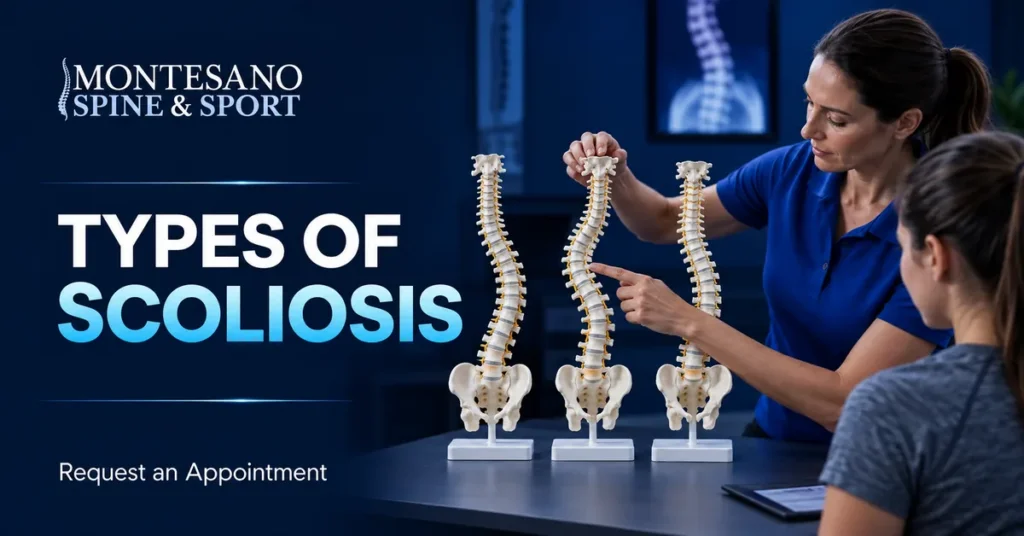
Scoliosis has many different forms that are each unique with different symptoms and treatments. Here are some of the different types of scoliosis:

  • Congenital Scoliosis: Congenital scoliosis is often present at birth. It is caused by a malformation of the spine while the baby develops in the womb. This development can result in vertebrae that are fused together or incompletely formed. 
  • Idiopathic Scoliosis: Idiopathic scoliosis is the most common type of scoliosis. The term “idiopathic” means unknown. 
  • Neuromuscular Scoliosis: Neuromuscular scoliosis occurs as a result of underlying conditions that affect the nerves or muscles. It’s often seen in those with cerebral palsy or spina bifida.
Subscribe for Newsletter

Related Posts

Physical therapist assessing a patient with tech neck at a computer workstation
Learn how to fix tech neck with seven practical strategies for screen setup, movement, exercise, sleep, and knowing when to seek medical care.
Spine specialist reviewing a herniated disc on MRI with a patient
Learn what a herniated disc looks like on MRI, how to read common report terms, when imaging is needed, and how results guide treatment.