
Yoga and Scoliosis: Can it help?

1 min read
Picture of Dr. Pasquale X. Montesano
Dr. Pasquale X. Montesano

Principal Orthopedic Spine surgeon at Montesano Spine & Sport.

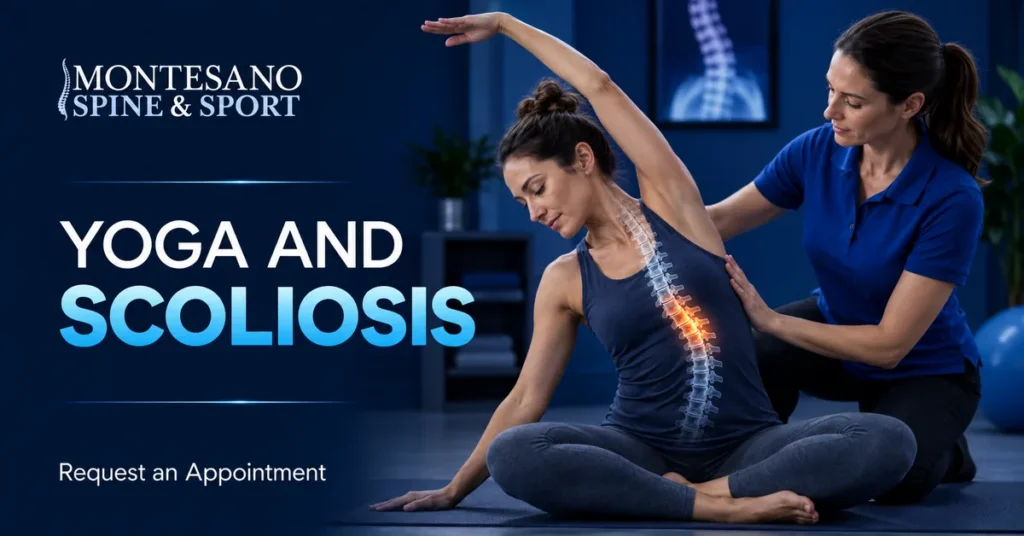
Woman practicing a gentle yoga pose to support scoliosis management

Table of Contents

Subscribe for Newsletter

Scoliosis is the abnormal curvature of the spine. It can present daily challenges to those who suffer from it. There’s a lot of different treatments for scoliosis ranging from bracing to surgery. A treatment that’s becoming more popular is yoga. Yoga helps to improve your flexibility and strength which can help when combatting scoliosis. Here’s how yoga can benefit you:

  • Building Core and Back Strength: Yoga helps to strengthen your core muscles and the muscles that surround your spine. Strengthening these muscles helps to reduce tension and strain on your back. 
  • Improving Flexibility: Scoliosis can lead to muscle imbalances where one side of your back becomes tighter than the other. Yoga stretches can help to alleviate the tension and stabilize your spine making daily tasks easier to accomplish.
  • Enhancing Posture Awareness: Yoga focuses on the practice and alignment of your mind and body. This can help to fix the spine shifts caused by scoliosis. 
Subscribe for Newsletter

Related Posts

Physical therapist evaluating C3-C4 cervical spine symptoms
Learn C3-C4 cervical spine symptoms, causes, warning signs, diagnosis, and treatment for nerve-root compression or spinal cord involvement.
Causes of arthritis in the back consultation at Montesano Spine and Sport
Learn what causes arthritis in the back, including facet-joint wear, inflammatory disease, injury, and risk factors, plus diagnosis and treatment.
Physical therapist assessing a patient with tech neck at a computer workstation
Learn how to fix tech neck with seven practical strategies for screen setup, movement, exercise, sleep, and knowing when to seek medical care.
Spine specialist reviewing a herniated disc on MRI with a patient
Learn what a herniated disc looks like on MRI, how to read common report terms, when imaging is needed, and how results guide treatment.