Quick Answer
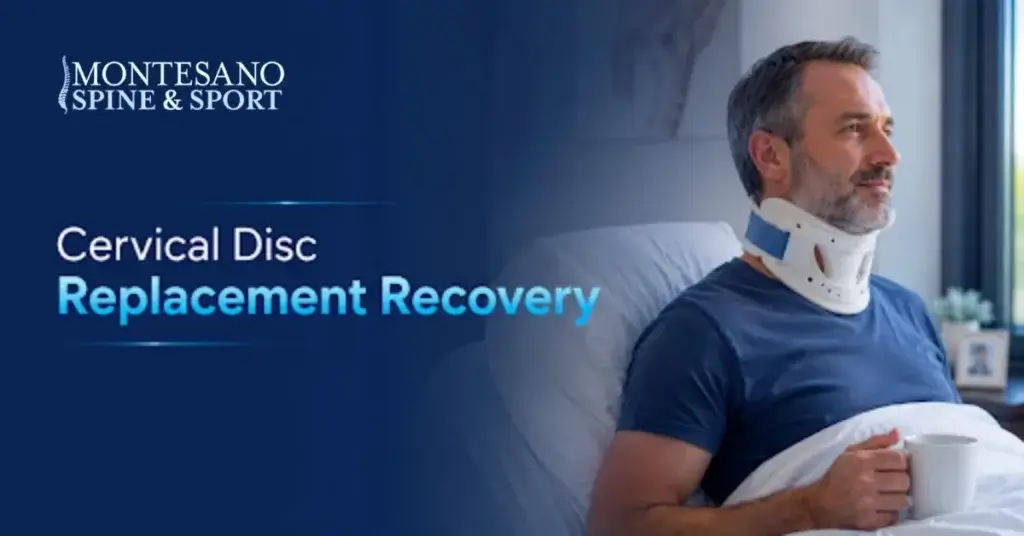
Cervical disc replacement recovery typically takes 6 to 12 weeks, while complete healing may continue for 3 to 6 months. Many patients return home the same day because the procedure preserves motion and usually requires a small incision. For example, walking may begin immediately, followed by gradual activity and physical therapy. Recovery varies with age, health, nerve compression, and surgical complexity, so patients should follow their surgeon’s restrictions and follow-ups.

Neck pain, arm pain, numbness, and weakness caused by a damaged cervical disc can significantly affect daily life. When conservative treatments such as medication, physical therapy, and injections no longer provide relief, cervical disc replacement may be recommended. This advanced surgical procedure removes the damaged disc and replaces it with an artificial disc designed to preserve natural motion in the neck.
For many patients, one of the most important questions is: “How long does recovery take after cervical disc replacement?” Understanding the recovery process can help you prepare for surgery and set realistic expectations for healing.
What Is Cervical Disc Replacement?
Cervical disc replacement, also known as cervical artificial disc replacement, is a procedure performed to treat conditions such as herniated discs, degenerative disc disease, and cervical radiculopathy. During surgery, the damaged disc is removed to relieve pressure on nearby nerves or the spinal cord. An artificial disc is then implanted to maintain movement between the vertebrae.
Unlike spinal fusion, which permanently joins two vertebrae together, cervical disc replacement is designed to preserve motion and reduce stress on adjacent spinal levels.
Immediate Recovery After Surgery
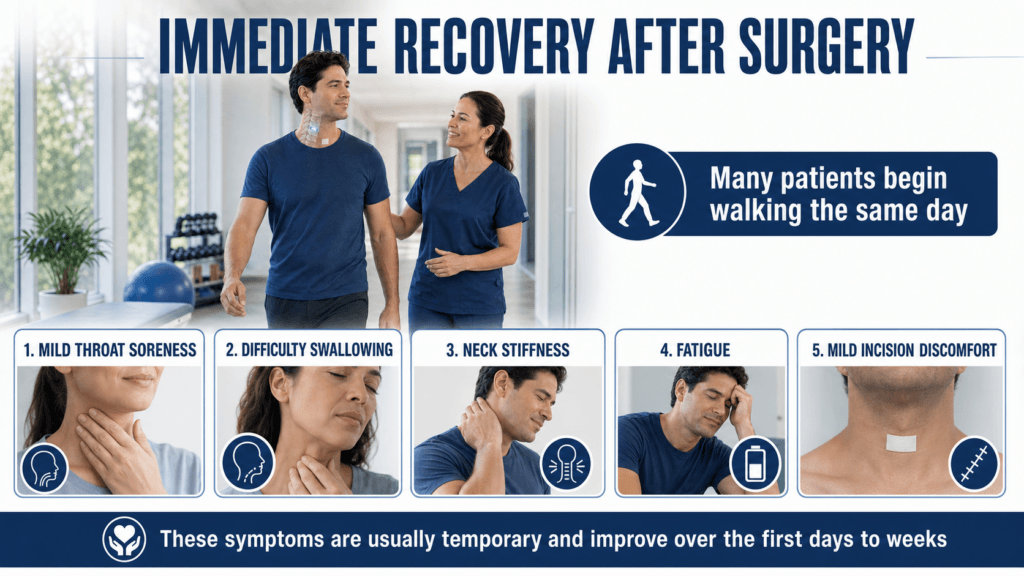
Most patients are surprised by how quickly they begin moving after surgery. In many cases, patients are encouraged to walk on the same day as the procedure.
Immediately after surgery, it is common to experience:
- Mild throat soreness
- Difficulty swallowing
- Neck stiffness
- Fatigue
- Mild discomfort around the incision
These symptoms are usually temporary and improve over the first few days to weeks. Many patients notice that nerve-related symptoms such as arm pain begin improving shortly after surgery, although numbness and weakness may take longer to resolve.
The First Week of Recovery
The first week focuses on rest, gentle movement, and allowing the surgical site to heal.
During this period, patients are generally encouraged to:
- Take short walks several times daily
- Avoid heavy lifting
- Follow medication instructions carefully
- Keep the incision clean and dry
- Avoid prolonged periods of sitting
Walking promotes circulation and helps reduce stiffness while supporting the body’s natural healing process.
Some patients may feel well enough to perform light daily activities within a few days, while others may require additional recovery time depending on their overall health and the complexity of the procedure.
Recovery During Weeks Two to Six
As healing progresses, most patients notice steady improvements in comfort and mobility.
Common milestones during this stage include:
- Reduced neck pain and stiffness
- Increased range of motion
- Improved energy levels
- Return to light work duties
- Gradual reduction in pain medication use
Patients with desk jobs may often return to work within two to four weeks, depending on their surgeon’s recommendations. Jobs involving physical labor typically require a longer recovery period.
Physical therapy may be recommended during this phase to help strengthen neck muscles, improve posture, and restore flexibility.
Long-Term Recovery and Healing
Although many patients feel significantly better within several weeks, complete healing continues for months after surgery.
By three months, many individuals have returned to most normal activities, including exercise and recreational activities approved by their physician.
Long-term recovery goals include:
- Restoring neck mobility
- Improving strength and endurance
- Reducing pain
- Preventing future spinal problems
- Returning to an active lifestyle
Most patients continue experiencing gradual improvements in function and comfort throughout the first year after surgery.
Factors That Affect Recovery Time
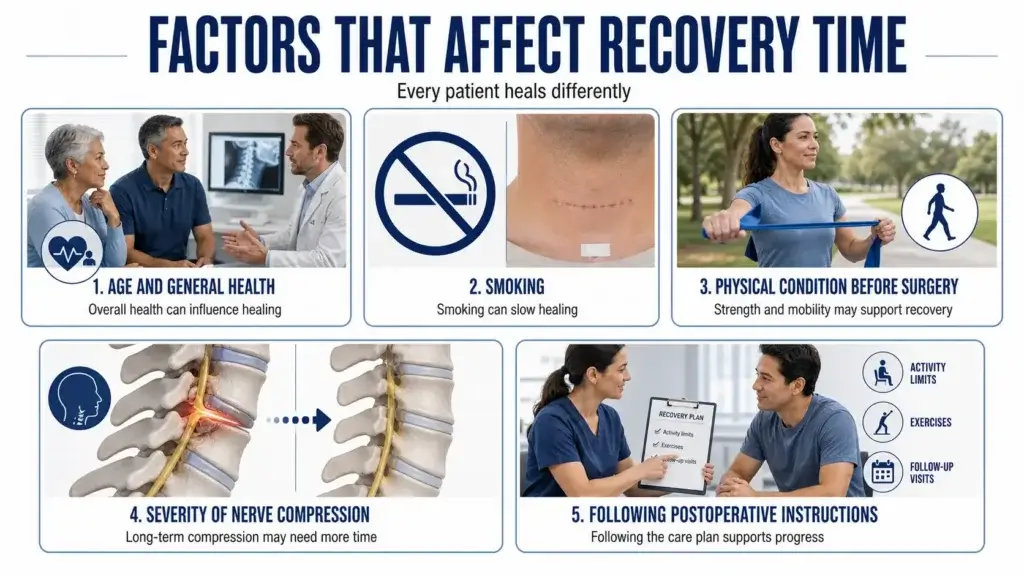
Every patient heals differently. Several factors can influence recovery speed and overall outcomes.
Age and General Health
Patients who are in good overall health often recover more quickly than those with chronic medical conditions.
Smoking
Smoking can negatively affect healing and may increase the risk of complications. Patients are often advised to stop smoking before and after surgery.
Physical Condition Before Surgery
Individuals who maintain good strength and mobility before surgery may experience a smoother recovery process.
Severity of Nerve Compression
If nerves were compressed for a long period before surgery, symptoms such as numbness or weakness may take longer to improve.
Following Postoperative Instructions
Carefully following activity restrictions, exercise recommendations, and follow-up appointments can significantly contribute to successful recovery.
Activities to Avoid During Recovery
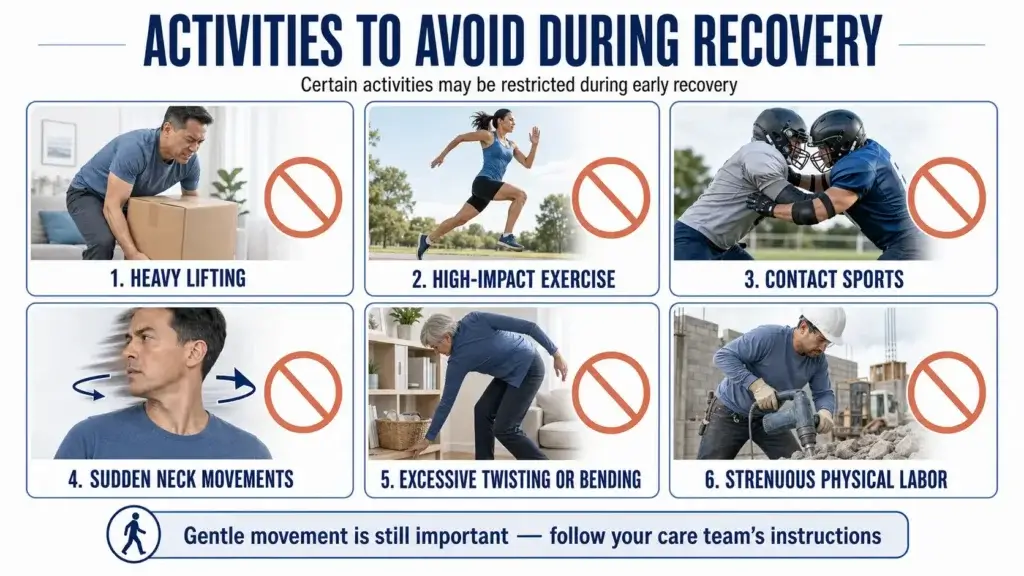
While movement is important, certain activities should be avoided during the early stages of recovery.
These commonly include:
- Heavy lifting
- High-impact exercise
- Contact sports
- Sudden neck movements
- Excessive twisting or bending
- Strenuous physical labor
Returning to these activities too quickly may increase stress on the healing tissues and potentially delay recovery.
Signs of a Successful Recovery

Most patients experience noticeable improvements in their symptoms as recovery progresses.
Positive signs include:
- Decreased neck pain
- Reduced arm pain
- Improved sensation in the hands and fingers
- Increased neck mobility
- Better sleep quality
- Improved ability to perform daily activities
It is important to remember that nerve healing often occurs gradually, and some symptoms may continue improving for several months.
When to Contact Your Doctor
While complications are uncommon, patients should contact their healthcare provider if they experience:
- Fever
- Increasing pain
- Redness or drainage from the incision
- Difficulty breathing
- Severe swallowing problems
- New weakness in the arms or legs
Prompt medical evaluation helps ensure any concerns are addressed quickly.
Cervical Disc Replacement Recovery
| Recovery Aspect | What to Expect |
| Procedure | Removal of a damaged cervical disc and replacement with an artificial disc |
| Hospital Stay | Often same-day discharge or 1-night stay |
| Walking After Surgery | Usually encouraged on the day of surgery |
| Return to Desk Work | Typically 2–4 weeks |
| Return to Physical Jobs | Often 6–12 weeks or longer depending on job demands |
| Neck Stiffness | Common during the first few weeks |
| Swallowing Difficulty | Mild and temporary for many patients |
| Physical Therapy | May begin several weeks after surgery if recommended |
| Driving | Usually resumed after physician approval and when pain medication is no longer needed |
| Light Exercise | Walking is encouraged early in recovery |
| Full Recovery Timeline | Approximately 3–12 months for complete healing and nerve recovery |
| Motion Preservation | Artificial disc maintains movement at the treated spinal level |
| Success Goal | Reduced pain, improved function, and preserved neck mobility |
Final Thoughts
Cervical disc replacement offers many patients an effective solution for relieving neck pain, arm pain, and nerve compression while preserving natural movement in the cervical spine. Recovery is often faster than many patients expect, with many individuals returning to normal daily activities within weeks.
Successful recovery requires patience, adherence to postoperative instructions, and gradual progression of activity levels. By understanding what to expect during each stage of healing, patients can approach recovery with confidence and focus on achieving the best possible outcome.