
How To Create A Sciatica-Friendly Workplace

1 min read
Picture of Dr. Pasquale X. Montesano
Dr. Pasquale X. Montesano

Principal Orthopedic Spine surgeon at Montesano Spine & Sport.

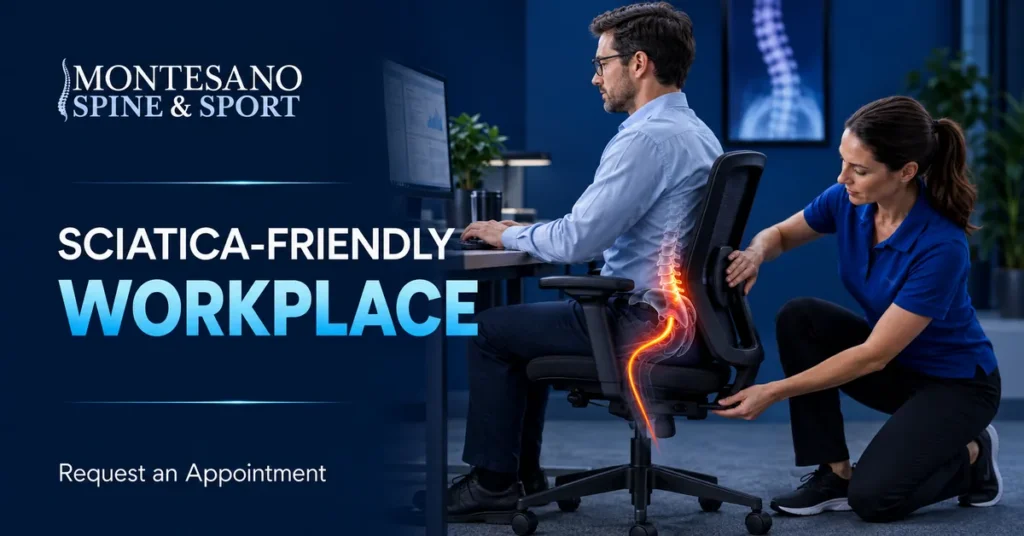
Ergonomic workstation setup designed to reduce sciatica discomfort

Table of Contents

Subscribe for Newsletter

Dealing with sciatic nerve pain can be challenging, especially if you work at a desk all day. A poorly designed workspace can enhance pain. Here’s a little guide to creating a sciatica-friendly workspace that promotes comfort and helps to reduce pain:

  • Choosing the Right Chair: Your chair plays a significant role in providing support for your lower back and preventing sciatic pain. You want a chair that will provide you with lumbar support, has adjustable settings, and protective cushioning. 
  • Ergonomic Deck Setup: An ergonomic desk can help you to keep your body positioned correctly while you work. Your desk should allow your elbows to bend at a 90-degree angle when typing. Your monitor should be just below your eye level to reduce neck strain.
  • Take Regular Breaks: Sitting for long periods of time can aggravate sciatica so it’s important to take regular breaks to move your body. Try standing up and stretching or take a quick walk around your office.

Subscribe for Newsletter

Related Posts

Physical therapist evaluating C3-C4 cervical spine symptoms
Learn C3-C4 cervical spine symptoms, causes, warning signs, diagnosis, and treatment for nerve-root compression or spinal cord involvement.
Causes of arthritis in the back consultation at Montesano Spine and Sport
Learn what causes arthritis in the back, including facet-joint wear, inflammatory disease, injury, and risk factors, plus diagnosis and treatment.
Physical therapist assessing a patient with tech neck at a computer workstation
Learn how to fix tech neck with seven practical strategies for screen setup, movement, exercise, sleep, and knowing when to seek medical care.
Spine specialist reviewing a herniated disc on MRI with a patient
Learn what a herniated disc looks like on MRI, how to read common report terms, when imaging is needed, and how results guide treatment.