

Sciatica Myths and Facts

1 min read
Picture of Dr. Pasquale X. Montesano
Dr. Pasquale X. Montesano

Principal Orthopedic Spine surgeon at Montesano Spine & Sport.

Older woman seated on a sofa reaches toward her lower leg and ankle, with the action clearly shown

Table of Contents

Subscribe for Newsletter

Sciatica affects millions worldwide through pain radiating along the sciatic nerve which runs down one or both legs from the back. There are many misconceptions that surround sciatica. Here are a few of them:

  • Myth: Sciatica only affects older adults- Sciatica is more common in those between the ages of 30 to 50, but can affect individuals of all ages. Factors such as lifestyles and occupations can contribute to the development of sciatica. 
  • Myth: Surgery is the only treatment optionSurgery is typically considered a last resort for sciatica. Most sciatica cases can be solved through physical therapy, acupuncture, and chiropractic care. 
  • Myth: Sciatica is only caused by herniated discs: Herniated discs are a common cause of sciatica, but are not the sole cause. Sciatica can also result from spinal stenosis, degenerative disc disease, or even pregnancy. Understanding the exact cause of your sciatica is important for treatment.
Subscribe for Newsletter

Related Posts

Physical therapist evaluating C3-C4 cervical spine symptoms
Learn C3-C4 cervical spine symptoms, causes, warning signs, diagnosis, and treatment for nerve-root compression or spinal cord involvement.
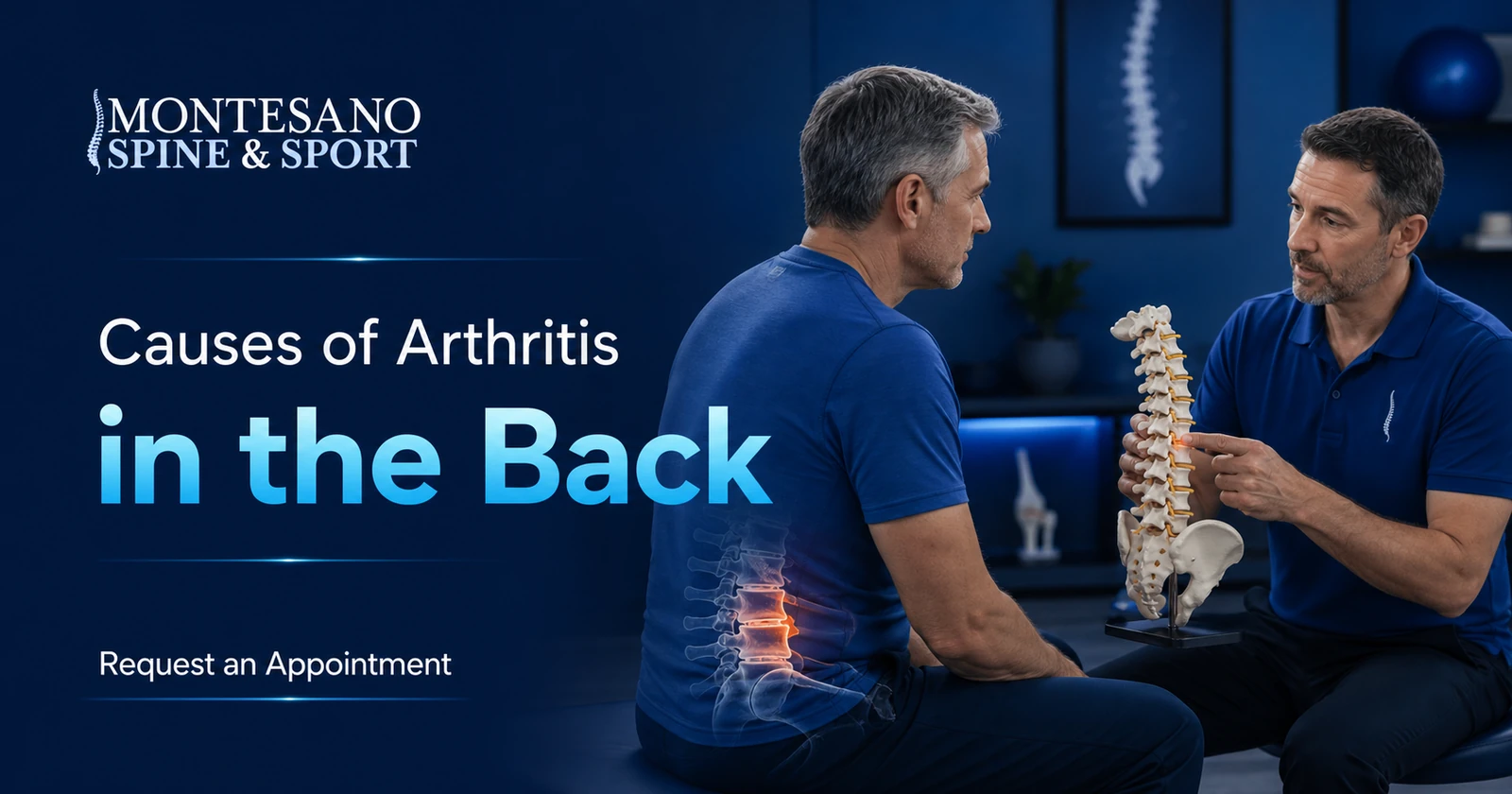
Causes of arthritis in the back consultation at Montesano Spine and Sport
Learn what causes arthritis in the back, including facet-joint wear, inflammatory disease, injury, and risk factors, plus diagnosis and treatment.
Physical therapist assessing a patient with tech neck at a computer workstation
Learn how to fix tech neck with seven practical strategies for screen setup, movement, exercise, sleep, and knowing when to seek medical care.
Spine specialist reviewing a herniated disc on MRI with a patient
Learn what a herniated disc looks like on MRI, how to read common report terms, when imaging is needed, and how results guide treatment.