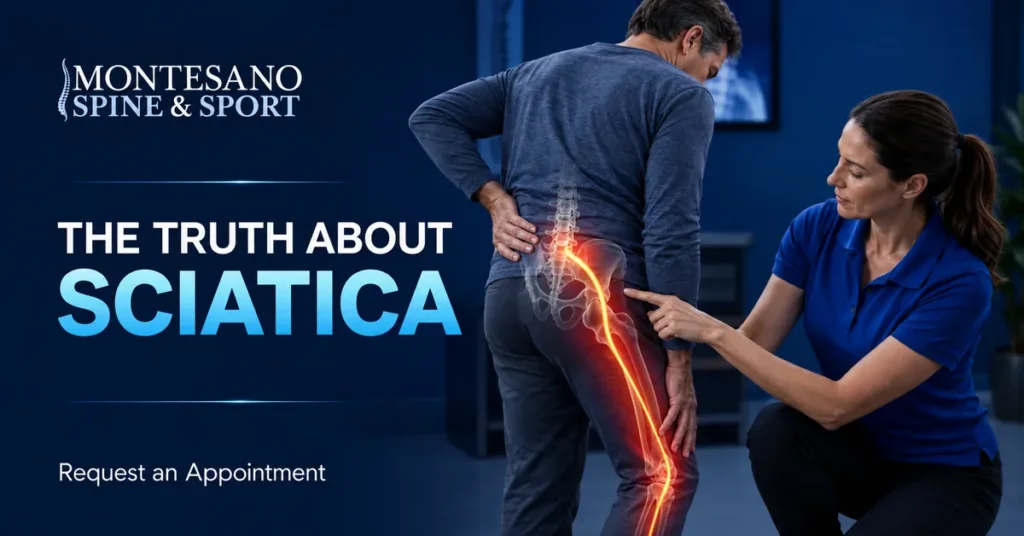
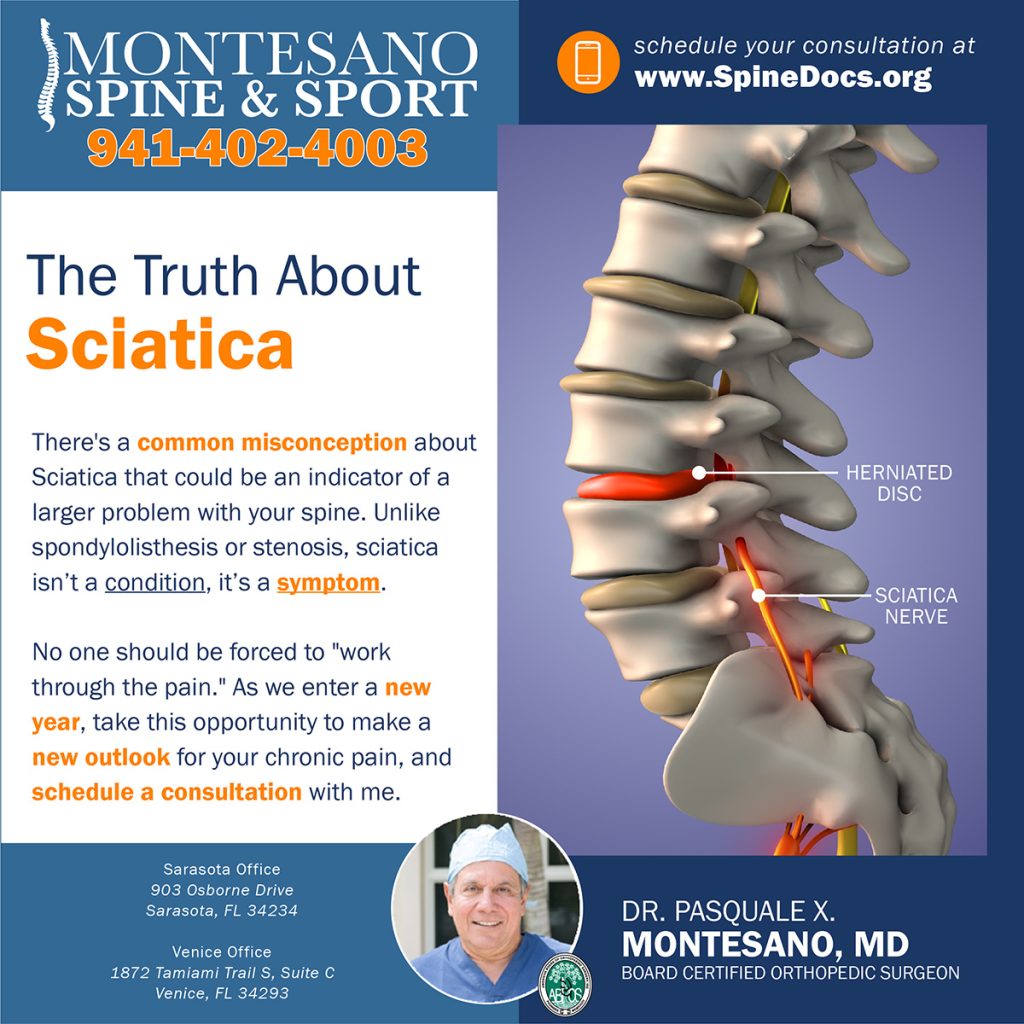
There’s a common misconception about Sciatica that could be an indicator of a larger problem with your spine. Unlike spondylolisthesis or stenosis, sciatica isn’t a condition, it’s a symptom.
The sciatica nerve, the thickest and longest nerve in the human body, originates in the lower back and extends down to the knee. If this nerve becomes compressed, typically as the result of a herniated disc or stenosis, it causes:
- Pain that worsens when sitting
- Constant pain in only one side
- Burning or tingling pain
- Sharp, searing pain
- Weakness, numbness, or difficulty moving the leg or foot
This pain may be infrequent or it may be debilitating and interrupt your day-to-day activities.
No one should be forced to “work through the pain” or sit on the sidelines. As we enter a new year, take this opportunity to make a new outlook for your chronic pain.
As a leading spine surgeon in Sarasota, FL and a pioneer of disc replacement surgery, I invite you to schedule a consultation. Together we’ll find the optimal treatment to relieve your sciatica.
Fill out the form below to schedule your first consultation with Montesano Spine and Sport.