


Quick Answer
Sleep on your back or side with your head and neck aligned with your spine. A supportive cervical pillow can preserve the neck’s natural curve and reduce pressure on irritated nerves. For example, side sleepers should use one pillow that fills the shoulder-to-head gap, while back sleepers may place a small pillow under their knees. Avoid stomach sleeping, stacked pillows, or twisting your neck. Seek medical advice if pain worsens.

Cervical radiculopathy, commonly known as a pinched nerve in the neck, can make getting a good night’s sleep extremely difficult. The condition occurs when a nerve root in the cervical spine becomes compressed or irritated, causing symptoms such as neck pain, numbness, tingling, burning sensations, and weakness that can travel into the shoulder, arm, and hand. These symptoms often become more noticeable at night, making it harder to find a comfortable sleeping position.
If you are wondering how to sleep with cervical radiculopathy or how to sleep with a pinched nerve in the neck, the good news is that certain sleeping positions, supportive pillows, and pain management techniques can significantly improve comfort and help you rest better. In this guide, we will cover the best sleeping positions, pillow recommendations, mattress selection, pre-sleep pain relief methods, and treatment options that can help you sleep more comfortably while managing cervical radiculopathy.
What Is Cervical Radiculopathy?
Cervical radiculopathy develops when a nerve in the neck becomes compressed due to conditions such as a herniated disc, spinal stenosis, bone spurs, or age-related degeneration. When pressure is placed on the nerve root, it can trigger pain and neurological symptoms that extend beyond the neck.
Many people experience symptoms that worsen when lying down because certain sleeping positions can increase pressure on the affected nerve. As a result, sleep quality often declines, which may slow healing and increase pain sensitivity over time.
Key Takeaway: Cervical radiculopathy is caused by nerve compression in the neck and often leads to sleep disruption due to pain, numbness, and tingling.
Why Is Sleeping Difficult with a Pinched Nerve in the Neck?
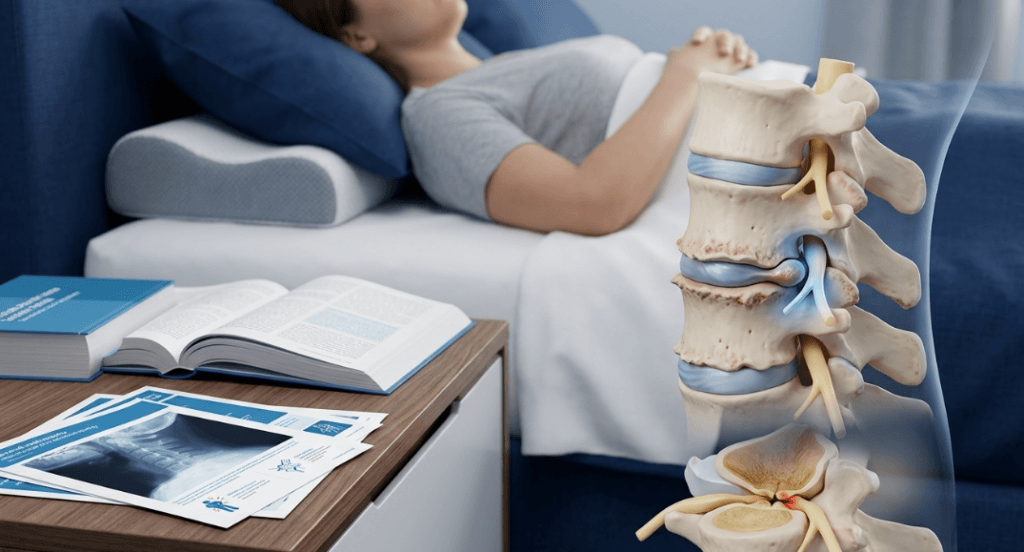
Sleeping can be challenging because nerve irritation does not stop when you go to bed. Poor neck alignment during sleep may increase pressure on the affected nerve, leading to worsening symptoms throughout the night. Many people wake up frequently due to arm numbness, shoulder pain, or shooting sensations traveling down the arm.
Additionally, prolonged periods in one position can cause inflammation around the nerve root to become more noticeable. This often results in stiffness and discomfort first thing in the morning, making restful sleep difficult to achieve.
Common Nighttime Symptoms
| Symptom | How It Affects Sleep |
| Neck pain | Makes it difficult to find a comfortable position |
| Tingling in the arm | Causes frequent waking |
| Numbness in fingers | Creates discomfort during sleep |
| Shoulder pain | Limits side-sleeping options |
| Muscle weakness | May increase neck strain overnight |
Key Takeaway: Poor sleeping posture can worsen nerve compression and increase nighttime symptoms.
Best Sleeping Positions for Cervical Radiculopathy
Choosing the right sleeping position is one of the most effective ways to reduce nerve pressure and improve sleep quality.
Side Sleeping
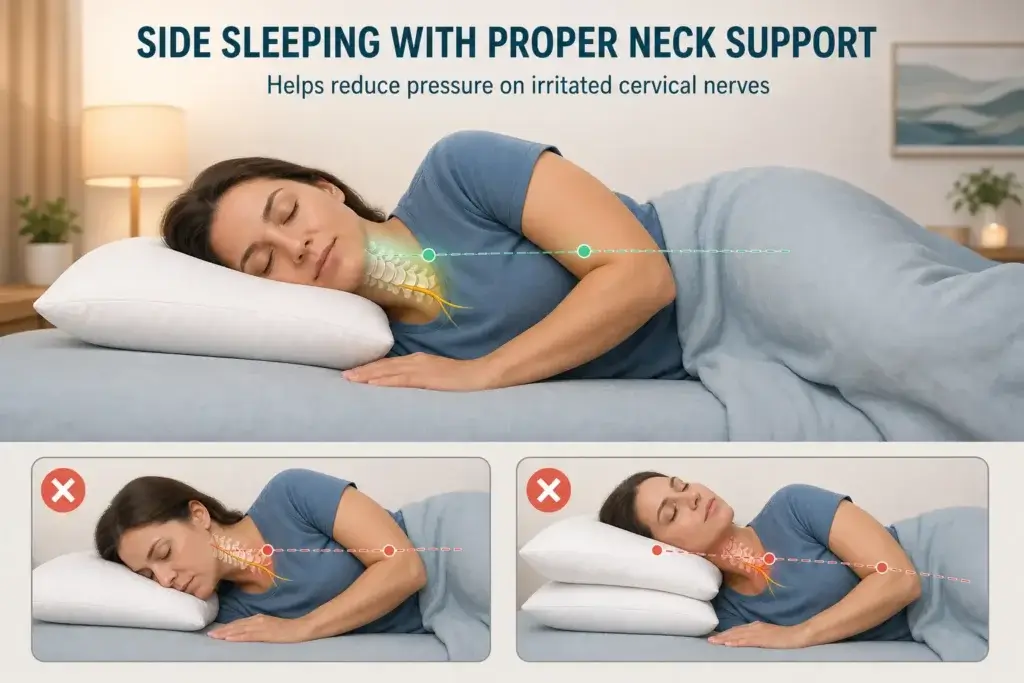
Side sleeping is often recommended for people with cervical radiculopathy. This position can help maintain a neutral spine while reducing stress on the neck. Using a supportive pillow that keeps the head aligned with the spine is essential to prevent additional nerve irritation.
When side sleeping, avoid curling your neck forward or using multiple pillows that push the head upward. Keeping your shoulders relaxed and your spine aligned can help minimize pressure on the affected nerve root.
Key Takeaway: Side sleeping with proper neck support can help reduce pressure on irritated cervical nerves.
Sleeping in a Reclined Position
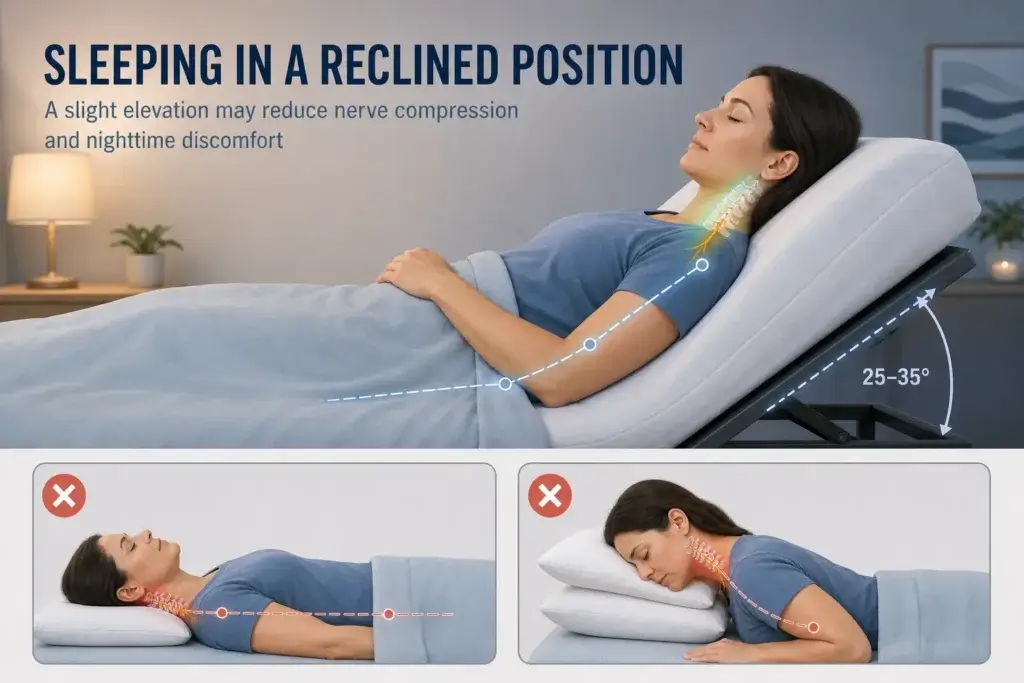
Many individuals find relief by sleeping in a slightly elevated or reclined position. Elevating the upper body may reduce spinal pressure and decrease inflammation around the affected nerve. Adjustable beds or wedge pillows can provide comfortable support throughout the night.
A reclined position may also prevent excessive neck flexion that can aggravate symptoms. This option is particularly beneficial for people whose pain worsens when lying completely flat.
Key Takeaway: A slightly elevated sleeping position may help reduce nerve compression and nighttime discomfort.
Back Sleeping
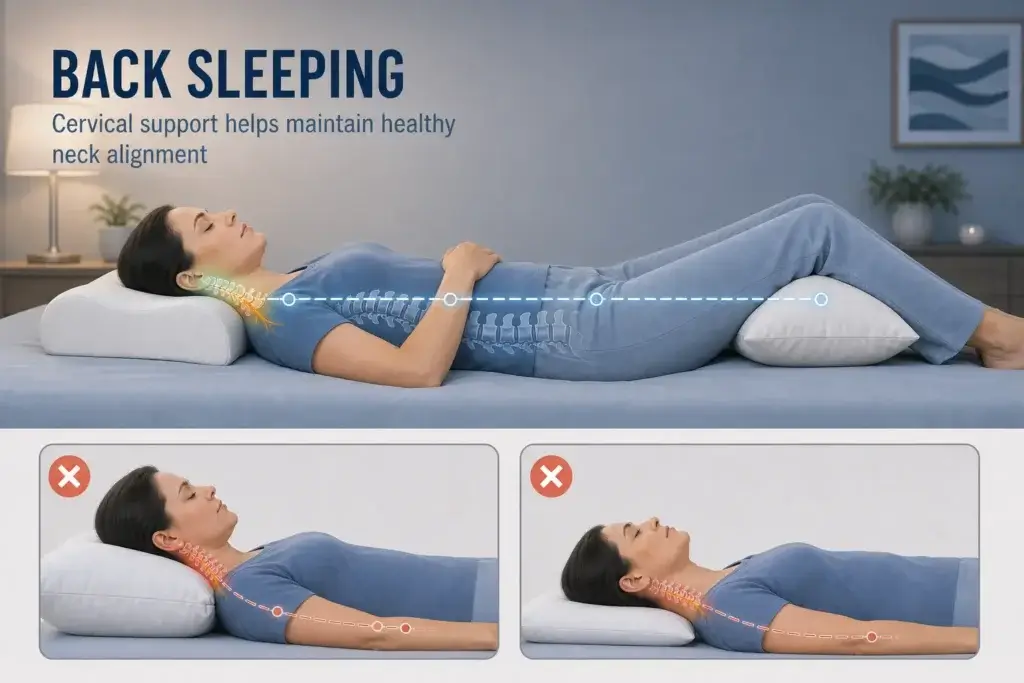
Back sleeping is another excellent option for people with a pinched nerve in the neck. This position allows the spine to remain in a neutral alignment while distributing body weight evenly. Using a cervical pillow can help maintain the natural curve of the neck and prevent strain.
Placing a small pillow under the knees may also improve overall spinal alignment and reduce tension throughout the body. Proper support is critical to avoid flattening or overextending the neck.
Key Takeaway: Back sleeping with a cervical support pillow can help maintain healthy neck alignment.
Sleeping Positions to Avoid
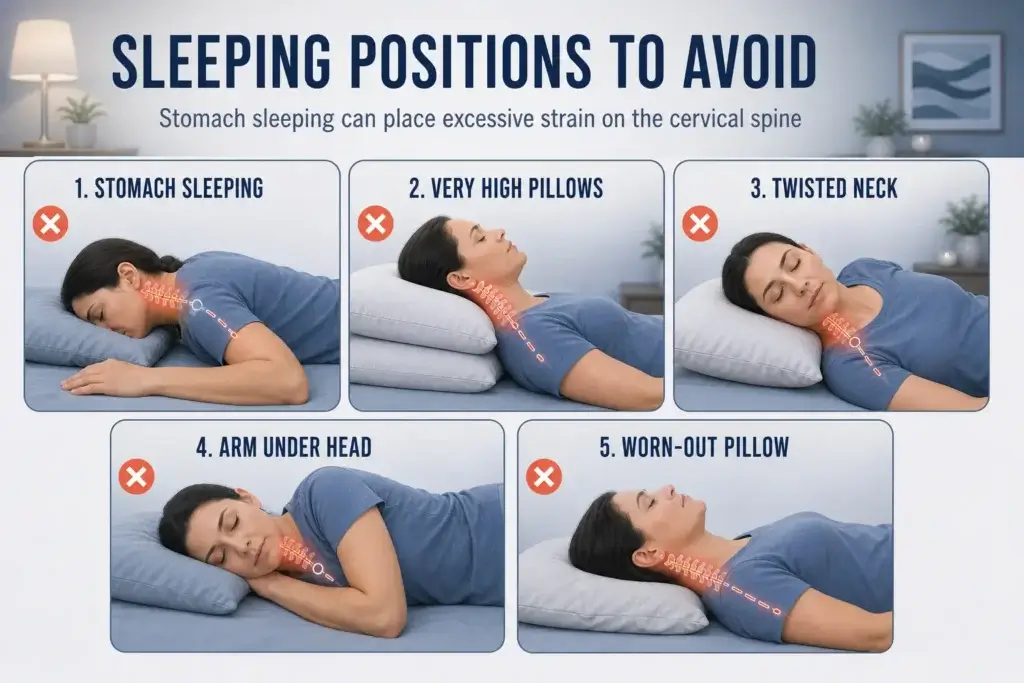
Some sleeping positions can increase nerve compression and worsen symptoms.
- Sleeping on your stomach
- Using very high pillows
- Twisting the neck while sleeping
- Sleeping with the arm under the head
- Using unsupportive or worn-out pillows
Key Takeaway: Stomach sleeping often places excessive strain on the cervical spine and should generally be avoided.
Choosing the Right Pillow for Cervical Radiculopathy
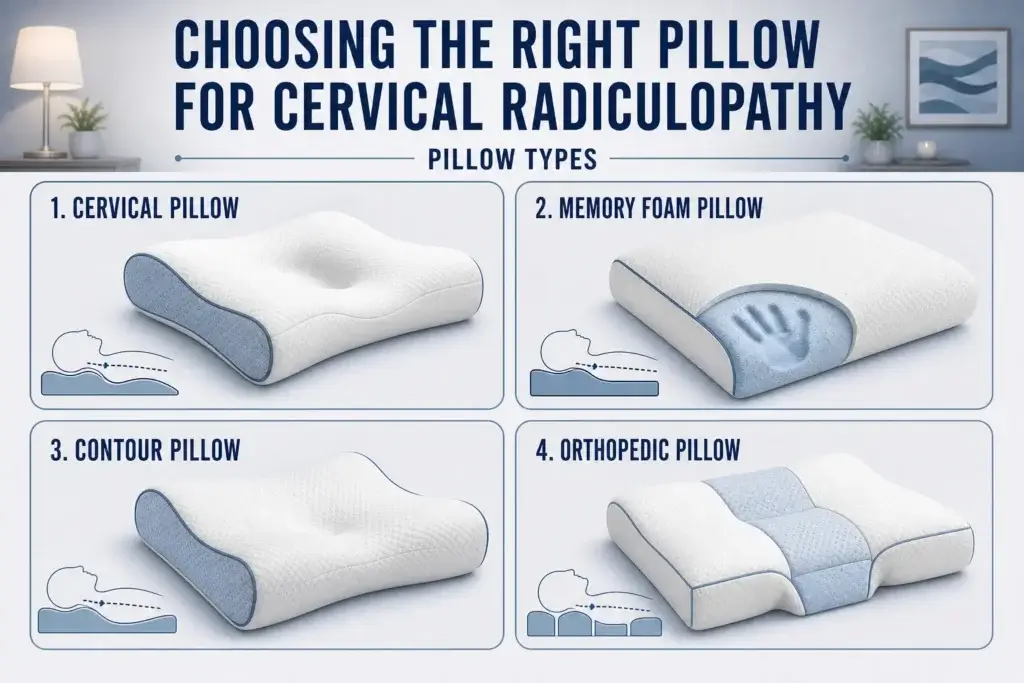
Your pillow plays a significant role in maintaining neck alignment during sleep. A pillow that properly supports the head and neck can reduce nerve irritation and improve comfort throughout the night.
Best Pillow Types
| Pillow Type | Benefits |
| Cervical pillow | Supports natural neck curvature |
| Memory foam pillow | Adapts to head and neck shape |
| Contour pillow | Promotes proper spinal alignment |
| Orthopedic pillow | Reduces pressure on cervical nerves |
Memory foam and cervical pillows are particularly popular because they provide consistent support while helping maintain a neutral sleeping posture.
Key Takeaway: The best pillow for cervical radiculopathy keeps the neck aligned and minimizes nerve pressure.
Choosing the Right Mattress
A supportive mattress can make a significant difference in sleep quality. A mattress that is too soft may allow the spine to sag, while one that is too firm can create pressure points and discomfort.
Most spine specialists recommend a medium-firm mattress because it provides a balance of support and comfort. Proper spinal alignment throughout the night helps reduce strain on the neck and may prevent symptom flare-ups.
Mattress Comparison
| Mattress Type | Recommended? | Reason |
| Medium-firm | Yes | Supports spinal alignment |
| Memory foam | Yes | Relieves pressure points |
| Very soft | No | Can cause spinal misalignment |
| Extra firm | Sometimes | May create pressure discomfort |
Key Takeaway: A medium-firm mattress typically provides the best support for cervical spine health.
Pre-Sleep Techniques to Reduce Neck Pain

Preparing your body for sleep can help reduce pain and improve comfort throughout the night.
Gentle Neck Stretches
Light stretching before bed can help relax tight muscles and improve flexibility around the cervical spine. Gentle neck rotations, side bends, and chin tucks may help reduce tension without aggravating symptoms.
Stretching should be performed slowly and within a pain-free range of motion. Aggressive stretching may worsen nerve irritation.
Heat Therapy
Applying a warm compress to the neck before bedtime can help relax muscles and increase blood flow to the affected area. Many people find that heat therapy helps reduce stiffness and prepares the body for sleep.
Cold Therapy
Cold therapy may be beneficial when inflammation is contributing to symptoms. An ice pack applied for short periods can help reduce swelling and numb painful areas.
Pain Relief Medications
Over-the-counter medications such as acetaminophen or anti-inflammatory medications may provide temporary relief. However, they should be used according to medical guidance and are not intended as a long-term solution.
Key Takeaway: Gentle stretching, heat therapy, and pain management techniques can make sleeping more comfortable.
Long-Term Treatment Options for Cervical Radiculopathy

While sleep modifications can help manage symptoms, addressing the underlying cause of nerve compression is often necessary for long-term relief. Treatment recommendations depend on the severity of symptoms and the underlying condition affecting the cervical spine.
Common treatment options may include:
- Physical therapy
- Posture correction programs
- Anti-inflammatory medications
- Epidural steroid injections
- Chiropractic care when appropriate
- Minimally invasive spine procedures
- Surgical treatment for severe cases
A healthcare professional can determine which treatment approach is most appropriate based on imaging studies, physical examination findings, and symptom severity.
Key Takeaway: Long-term relief often requires treating the underlying source of nerve compression.
When Should You See a Doctor?
While mild cases may improve with conservative treatment, some symptoms require medical evaluation. Persistent pain, increasing weakness, or worsening numbness should never be ignored.
Seek medical attention if you experience:
- Symptoms lasting longer than several weeks
- Progressive arm weakness
- Loss of coordination
- Severe pain that interrupts sleep nightly
- Numbness that continues to worsen
Early diagnosis can help prevent complications and improve treatment outcomes.
Key Takeaway: Persistent or worsening neurological symptoms should be evaluated by a healthcare professional.
Final Thoughts
Learning how to sleep with cervical radiculopathy starts with proper neck support, healthy sleeping posture, and effective pain management strategies. Small adjustments such as changing your sleeping position, choosing the right pillow, and improving mattress support can make a significant difference in sleep quality. If symptoms continue to interfere with daily activities or restful sleep, seeking professional evaluation can help identify the underlying cause and guide you toward lasting relief.