
Quick Answer: Symptoms of cervical vertigo usually combine dizziness or unsteadiness with neck pain, stiffness, or reduced neck motion. Episodes may worsen when the neck moves or stays in one position, but there is no single confirmatory test, so clinicians first rule out inner-ear, neurologic, cardiovascular, medication-related, and vascular causes.
Dizziness is common, and the neck is only one possible source. Cervicogenic dizziness, often called cervical vertigo, is a debated diagnosis used when neck dysfunction appears closely linked to dizziness after more common or dangerous causes have been excluded. The term “vertigo” can be misleading because many people describe imbalance, lightheadedness, or a floating sensation rather than true room-spinning.
Cervical Vertigo Symptoms at a Glance
| Finding | What it may suggest | What to do |
|---|---|---|
| Dizziness plus neck pain or stiffness | Possible cervicogenic contribution | Arrange a clinical assessment if persistent |
| Brief spinning with rolling in bed | An inner-ear cause such as BPPV may be more likely | Ask about positional testing |
| Hearing loss, ringing, or ear pressure | An ear disorder needs consideration | Discuss vestibular or ENT evaluation |
| Double vision, slurred speech, facial droop, or one-sided weakness | Possible neurologic or vascular emergency | Seek emergency care now |
What Do Symptoms of Cervical Vertigo Feel Like?
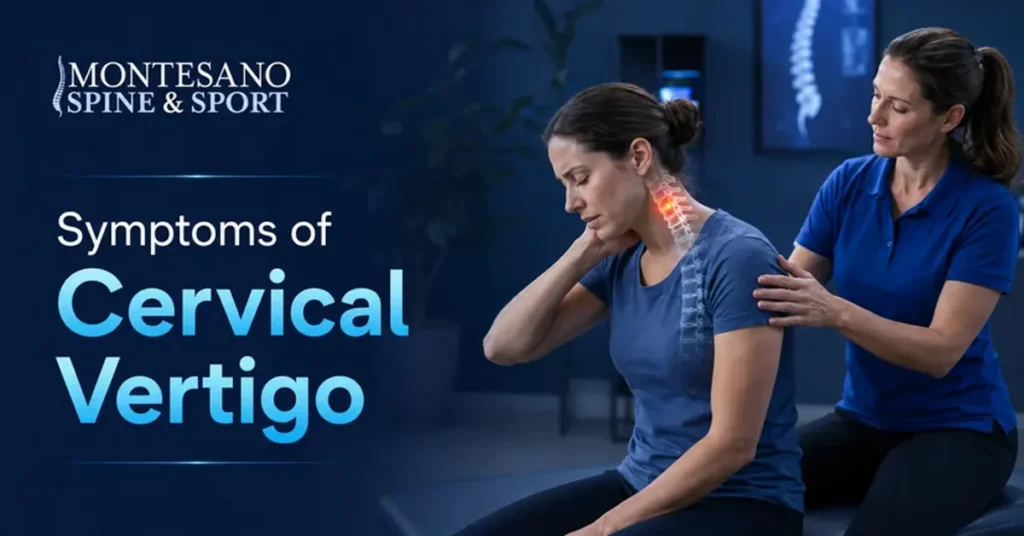
People may report unsteadiness, lightheadedness, a floating sensation, disorientation, or occasionally spinning. Neck pain, muscle tightness, headache at the back of the skull, limited motion, nausea, visual sensitivity, and difficulty walking may occur at the same time. Symptoms can appear after whiplash or another neck injury, or alongside age-related disc and joint changes.
A useful clue is timing: dizziness and neck symptoms rise and fall together, and an episode may follow turning the head, looking up, working at a screen, or maintaining a guarded posture. Nystagmus, vomiting, or pronounced spinning can also occur with vestibular disorders, so these findings should not be assumed to come from the cervical spine.
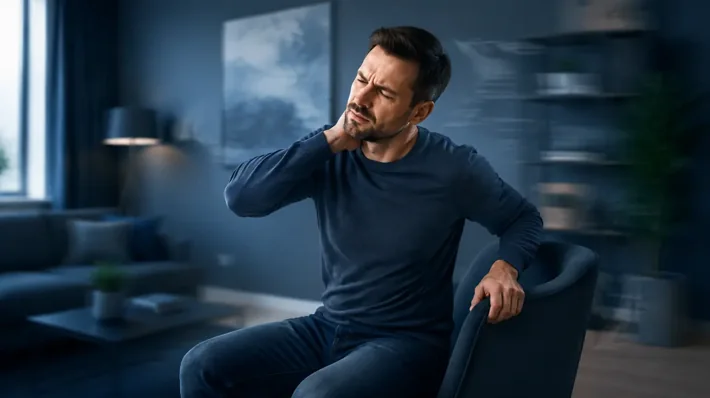
Key takeaway: Cervical vertigo is a pattern of linked neck symptoms and dizziness, not a single distinctive sensation.
Why Can the Neck Affect Balance?
Muscles and joints high in the neck contain position sensors that help the brain map where the head is relative to the body. One proposed mechanism is that painful or altered signals from these sensors conflict with information from the eyes and inner ears. Migraine, muscle spasm, and altered neck movement can overlap with this process.
Rarely, dizziness with neck movement may reflect reduced blood flow, arterial injury, or another vascular problem. Those conditions are different from routine mechanical neck pain and need urgent medical assessment, especially after trauma or forceful neck manipulation.
Related SpineDocs reading: Cervical vertigo and Can a pinched nerve cause dizziness?.
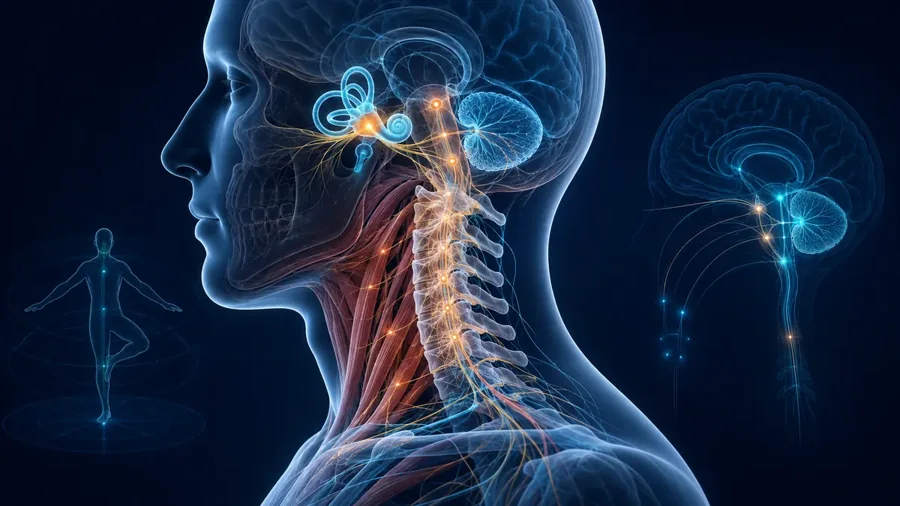
Key takeaway: The leading explanation involves conflicting neck-position signals, but vascular and vestibular causes must be considered first.
How Cervical Vertigo Is Diagnosed
Diagnosis starts with the story: the quality and duration of dizziness, triggers, neck symptoms, recent injury, migraine history, medicines, hearing changes, and cardiovascular risk. Examination may include blood pressure, eye movements, cranial nerves, strength, sensation, walking, balance, neck motion, and positional maneuvers such as Dix-Hallpike when appropriate.
Vestibular testing can assess the inner ear. MRI or CT may evaluate the brain or cervical spine, while MRA, CTA, or vascular ultrasound may be used when circulation is a concern. Imaging can identify degenerative disc disease or a disc problem, but it cannot prove that the neck is causing dizziness. A cervical neck torsion test may add information in selected patients, yet it is not a stand-alone answer.
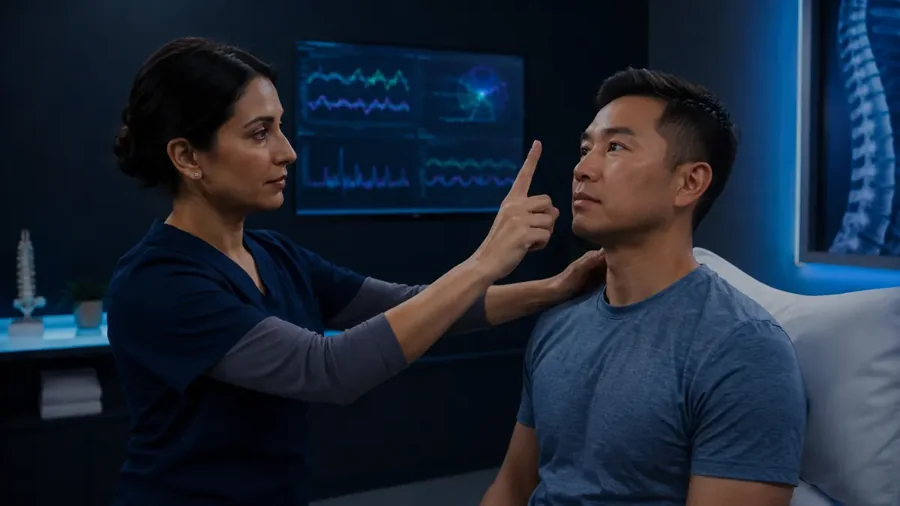
Key takeaway: A careful exclusion process matters more than any single scan or bedside test.
Treatment Options and Best Practices
Treatment should match the likely cause. For a mechanical cervical contribution, a clinician may recommend graded neck mobility, deep-neck-flexor and shoulder-blade strengthening, posture changes, manual therapy, and a home program. Vestibular rehabilitation may add gaze-stability and balance exercises when sensory mismatch or a concurrent vestibular problem is present.
Short-term medicines may help pain, muscle spasm, nausea, or migraine when prescribed for the right diagnosis. Procedures or surgery are not routine treatments for dizziness itself. They may be considered only when a defined structural disorder causes separate neurologic or pain symptoms and nonsurgical care has not worked.
Best practice is to progress one variable at a time, keep a symptom-and-trigger log, use fall precautions, and reassess if the pattern changes.
Key takeaway: Most care is individualized rehabilitation plus treatment of any confirmed vestibular, migraine, or cervical disorder.
Common Mistakes to Avoid
Do not assume every dizzy spell is caused by a tight neck or an abnormal MRI. Avoid aggressive self-manipulation, driving during unpredictable episodes, or continuing exercises that create new neurologic symptoms. Another common mistake is resting completely for weeks; once serious causes are excluded, gradual safe activity is usually more useful than prolonged avoidance.
Key takeaway: Treat the diagnosis as provisional and update it when symptoms, examination findings, or response to care do not fit.
When to Seek Urgent Care
Call emergency services for sudden severe dizziness with facial droop, weakness or numbness on one side, double vision, trouble speaking, inability to walk, fainting, chest pain, or a new severe headache. Seek prompt assessment after significant head or neck trauma, or for fever, progressive arm or leg weakness, loss of coordination, or new bowel or bladder dysfunction.
Key takeaway: New focal neurologic symptoms or abrupt severe dizziness should be treated as an emergency, not as routine cervical vertigo.
Conclusion
Symptoms of cervical vertigo deserve a broad, safety-first evaluation. When dizziness consistently tracks with neck pain and other causes are excluded, targeted cervical and vestibular rehabilitation may improve balance and function. If the pattern is sudden, severe, or neurologic, urgent assessment takes priority.
Resources and References
Request an Appointment
Ready to discuss your symptoms or treatment options? Request an appointment with SpineDocs | Montesano Spine & Sport for an individualized evaluation.