
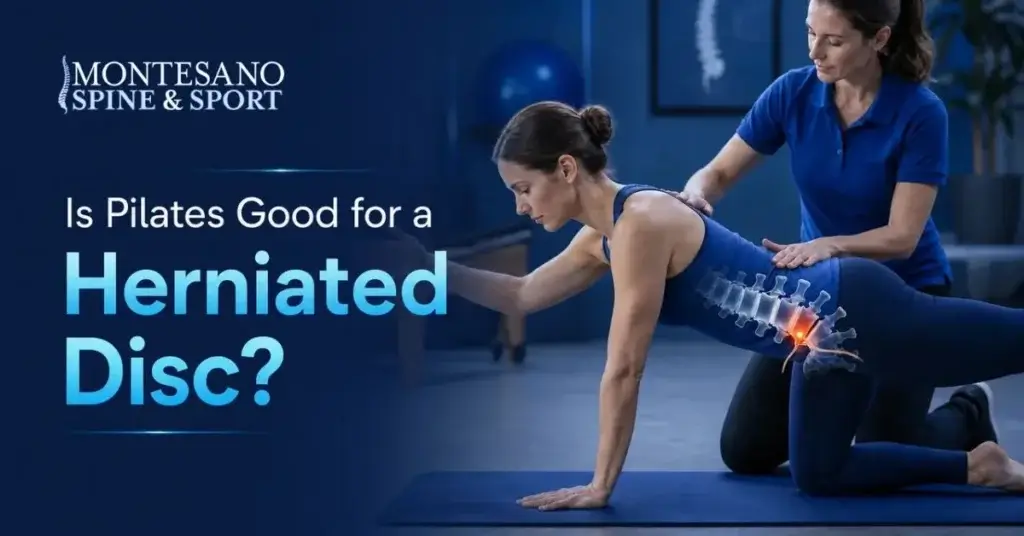
yes. Pilates can be beneficial for many people with a herniated disc when it is performed correctly and under professional guidance. The controlled movements, core strengthening, improved posture, and flexibility that Pilates promotes may help reduce pressure on the spine and improve long-term function. However, not every exercise is appropriate during every stage of recovery, and some movements can worsen symptoms if performed incorrectly.
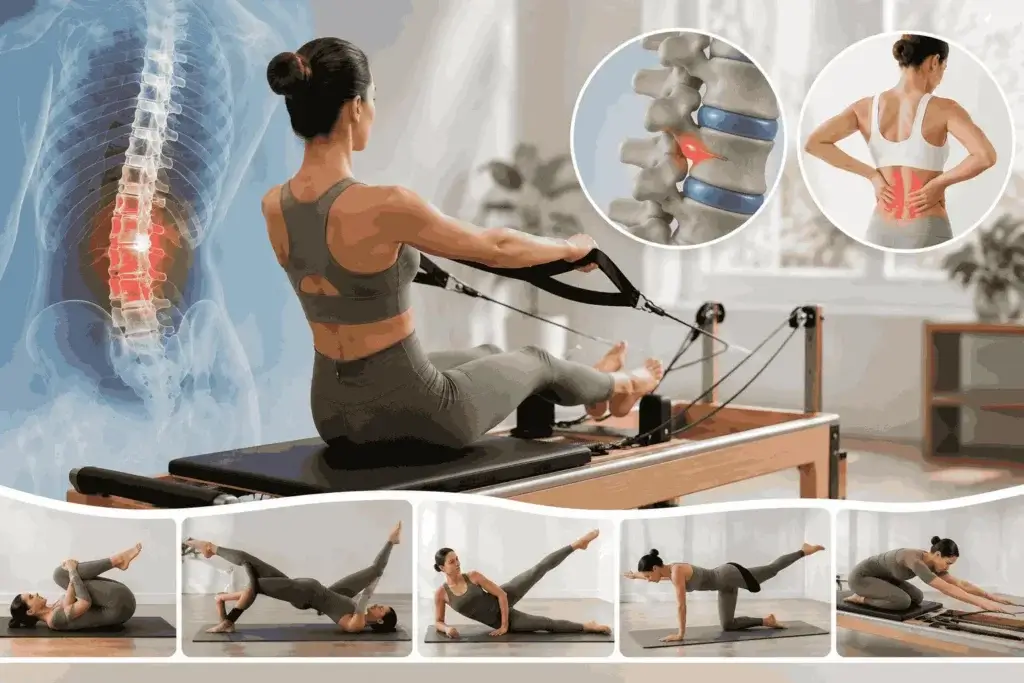
At SpineDocs (Montesano Spine & Sports), we often recommend movement-based rehabilitation as part of a personalized treatment plan. Pilates is one option that may support recovery by improving spinal stability, strengthening supporting muscles, and encouraging healthier movement patterns. The key is choosing the right exercises, progressing gradually, and avoiding movements that increase pain.
Key takeaway: Pilates can support recovery from a herniated disc when it is tailored to your condition and performed safely.
What Is a Herniated Disc?
A herniated disc occurs when the soft inner material of a spinal disc pushes through its tougher outer layer. This can irritate nearby nerves, leading to symptoms such as back pain, neck pain, numbness, tingling, or weakness in the arms or legs. Herniated discs most commonly affect the lower back but may also develop in the neck.
Symptoms vary from person to person. Some individuals experience only mild discomfort, while others have pain that limits daily activities. Proper diagnosis helps determine whether conservative treatments such as physical therapy, Pilates, or other rehabilitation methods are appropriate.
Key takeaway: A herniated disc affects the spine differently in every person, so treatment should always be individualized.
Common Symptoms of a Herniated Disc
| Symptom | Description |
| Lower back pain | Persistent or sharp pain in the lumbar spine |
| Neck pain | Pain that may radiate into the shoulders or arms |
| Sciatica | Pain traveling down one leg due to nerve irritation |
| Numbness | Reduced sensation in the arms, legs, hands, or feet |
| Tingling | Pins and needles feeling along affected nerves |
| Muscle weakness | Difficulty lifting, walking, or maintaining balance |
How Can Pilates Help a Herniated Disc?
Pilates focuses on controlled movement rather than high-impact exercise. Many exercises strengthen the deep core muscles that support the spine, helping reduce unnecessary stress on injured discs. Better posture and body mechanics can also decrease strain during everyday activities.
Pilates also emphasizes breathing, alignment, and muscle control. These principles help patients move more efficiently while reducing compensatory movements that may contribute to ongoing pain. When incorporated into a rehabilitation program, Pilates may improve mobility, confidence, and overall spinal function.
Key takeaway: Pilates supports spinal stability by improving strength, posture, and controlled movement.
Benefits of Pilates for a Herniated Disc
Strengthens Core Muscles
The deep abdominal muscles, pelvic floor, diaphragm, and back muscles work together to stabilize the spine. Pilates targets these muscle groups through slow and controlled exercises that improve support without placing excessive stress on the back.
A stronger core allows the spine to move more efficiently during daily activities such as walking, bending, lifting, and standing. Better muscular support may also reduce recurring episodes of back pain.
Key takeaway: A stronger core provides better support for the injured spine.
Improves Posture
Poor posture places additional pressure on spinal discs and surrounding joints. Pilates teaches proper body alignment and awareness, helping people maintain healthier posture while sitting, standing, and moving throughout the day.
Improved posture also distributes body weight more evenly across the spine. This reduces unnecessary stress on injured tissues and may decrease pain over time.
Key takeaway: Better posture helps reduce pressure on spinal structures.
Enhances Flexibility
Tight muscles around the hips, hamstrings, and lower back often contribute to abnormal movement patterns. Gentle stretching within Pilates helps improve flexibility while maintaining spinal control.
Greater flexibility allows the body to move with less strain and may reduce muscle stiffness associated with chronic back pain.
Key takeaway: Flexible muscles improve movement while reducing unnecessary spinal stress.
Encourages Better Body Mechanics
Pilates teaches people how to move correctly rather than simply strengthening muscles. Learning safe bending, lifting, reaching, and twisting techniques helps protect the spine during everyday activities.
Improved movement habits often continue beyond exercise sessions, making daily tasks safer and more comfortable.
Key takeaway: Better movement habits reduce repeated stress on the spine.
May Help Reduce Pain
While Pilates is not a cure for a herniated disc, strengthening supportive muscles and improving movement patterns may decrease pain over time. Many patients also experience improved confidence as their mobility increases.
Pain relief usually develops gradually through consistent practice and should always be combined with appropriate medical guidance.
Key takeaway: Consistent Pilates may help reduce pain by improving spinal support.
Is Pilates Safe for Everyone With a Herniated Disc?
Not always. During the early stages of a severe herniated disc or during periods of intense pain, certain Pilates exercises may aggravate symptoms. Individuals with significant nerve compression, worsening weakness, or severe pain should first receive a medical evaluation before beginning any exercise program.
A qualified healthcare provider or physical therapist can determine when Pilates is appropriate and which modifications are necessary. Starting slowly and progressing gradually reduces the risk of setbacks.
Key takeaway: Pilates should match your stage of recovery and individual symptoms.
Pilates Exercises That May Be Helpful
These beginner-friendly exercises are often introduced during rehabilitation under professional supervision.
| Exercise | Potential Benefit |
| Pelvic Tilts | Improves spinal mobility and core activation |
| Heel Slides | Builds core stability with minimal spinal stress |
| Bird Dog | Strengthens the back and abdominal muscles |
| Dead Bug | Improves trunk stability and coordination |
| Modified Bridge | Strengthens the glutes and core |
| Cat-Cow Stretch | Promotes gentle spinal mobility |
Always stop if an exercise causes increased pain, numbness, or tingling.
Key takeaway: Gentle, controlled exercises are generally more appropriate than advanced Pilates movements.
Pilates Exercises to Avoid With a Herniated Disc
Some traditional Pilates movements place excessive stress on the spine, particularly during active symptoms.
- Full sit-ups
- Roll-Up
- Roll-Over
- Teaser
- Jackknife
- Deep spinal twists
- High-impact jumping exercises
- Rapid flexion-based movements
These exercises may increase pressure inside the spinal discs and worsen nerve irritation in some individuals.
Key takeaway: Avoid exercises that increase pain or require aggressive spinal bending or twisting.
When Should You Avoid Pilates?
You should delay Pilates and seek medical evaluation if you experience:
- Severe or worsening back pain
- Progressive leg or arm weakness
- Loss of bladder or bowel control
- Increasing numbness
- Difficulty walking
- Severe pain following a recent injury
These symptoms may indicate a more serious spinal condition requiring prompt treatment. Key takeaway: Serious neurological symptoms require immediate medical evaluation before exercising.
Other Treatments That May Help
Pilates is often one part of a comprehensive treatment plan. Depending on your symptoms, your provider may also recommend:
| Treatment | Purpose |
| Physical therapy | Improve strength and mobility |
| Activity modification | Reduce stress on the spine |
| Anti-inflammatory medications | Decrease pain and inflammation |
| Epidural steroid injections | Reduce nerve irritation |
| Chiropractic care (when appropriate) | Improve mobility for selected patients |
| Lifestyle changes | Support long-term spinal health |
| Surgery | Considered when conservative care fails or neurological symptoms worsen |
Key takeaway: The most effective treatment plan often combines exercise with other evidence-based therapies.
Tips for Practicing Pilates SafelyGet medical clearance before starting.
Work with a qualified Pilates instructor or physical therapist.
- Begin with beginner-level exercises.
- Focus on proper technique rather than intensity.
- Avoid movements that increase pain.
- Progress gradually.
- Listen to your body and rest when needed.
- Maintain regular communication with your healthcare provider.
Key takeaway: Safe progression and proper instruction are essential for successful recovery.
When to See a Spine Specialist
If your back or neck pain continues despite rest, exercise, or conservative treatment, it may be time for a professional evaluation. Persistent numbness, weakness, or pain that interferes with daily life should never be ignored.
At SpineDocs (Montesano Spine & Sports), our team provides comprehensive evaluations and personalized treatment plans designed to relieve pain, restore function, and help patients return to the activities they enjoy. Whether Pilates is appropriate for your recovery depends on your individual condition, and we are here to guide you toward the safest and most effective approach for long-term spinal health.